By Shilpa Khirbat | Medical Writer & Health Blogger
“The body whispers before it screams. Chronic inflammation is often one of those whispers — quietly affecting not only your physical health but also your thoughts, emotions, and energy.”
For decades, physical health and mental health were treated as two separate worlds. If your joints hurt, you visited a physician. If you felt anxious or depressed, you sought psychological care. However, over the past two decades, a growing body of research has been quietly dismantling this assumption.
Modern science is revealing a different story.
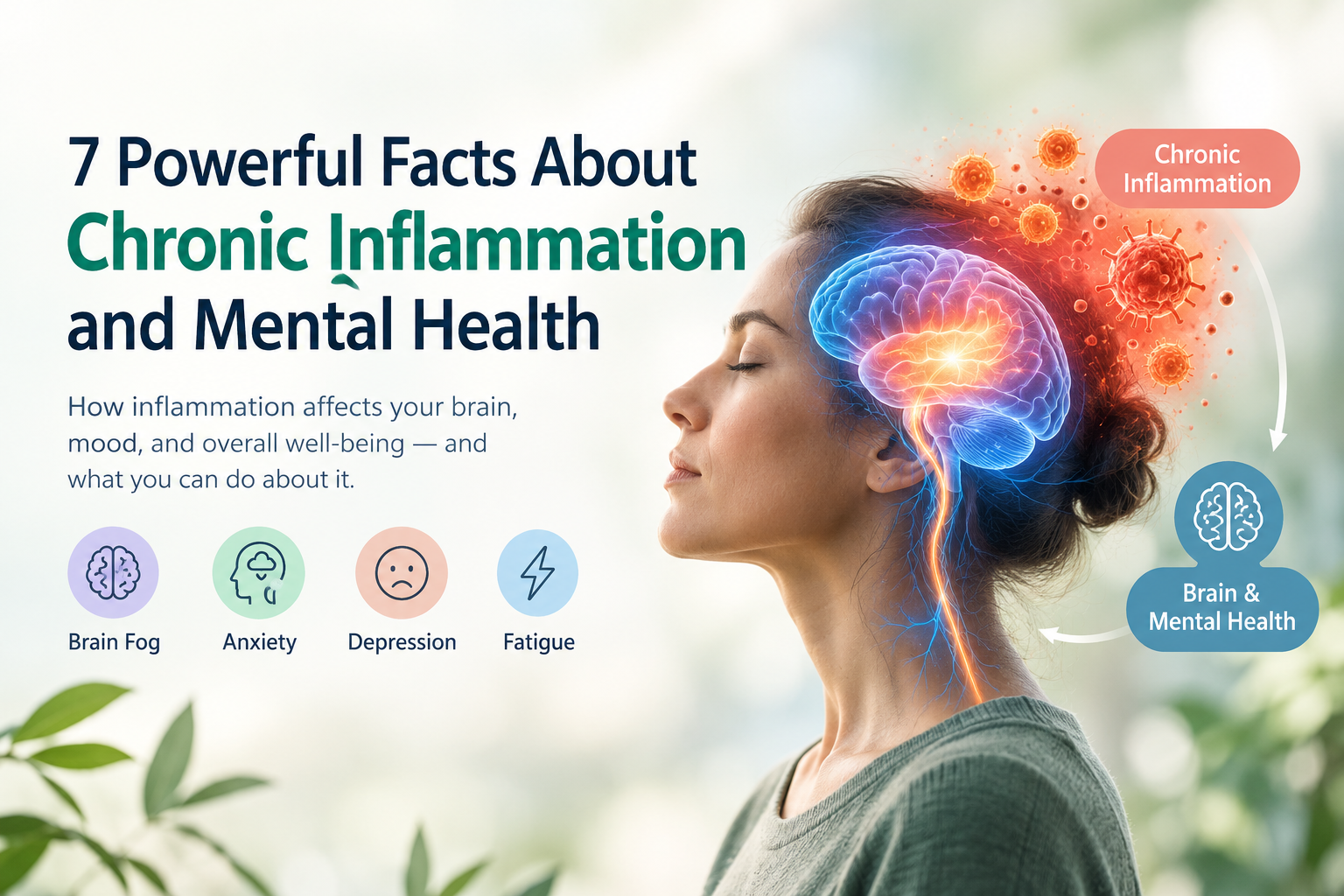
Your immune system, brain, gut, hormones, and nervous system are constantly communicating. One of the most important messengers in this conversation is chronic inflammation — the kind that smoulders silently in the body for months or years, reaching the brain and altering mood, disrupting cognition, and playing a documented role in depression, anxiety, chronic fatigue, and cognitive decline.
Here is what the science actually shows.
Inflammation: The Good Kind and the Dangerous Kind
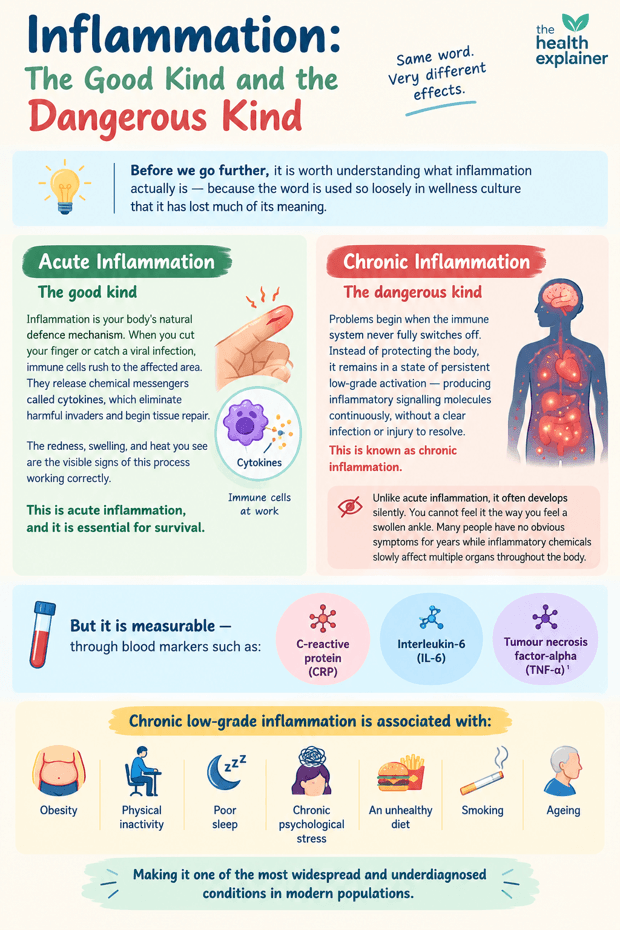
Before we go further, it is worth understanding what inflammation actually is — because the word is used so loosely in wellness culture that it has lost much of its meaning.
Inflammation is your body’s natural defence mechanism. When you cut your finger or catch a viral infection, immune cells rush to the affected area. They release chemical messengers called cytokines, which eliminate harmful invaders and begin tissue repair. The redness, swelling, and heat you see are the visible signs of this process working correctly. This is acute inflammation, and it is essential for survival.
Problems begin when the immune system never fully switches off. Instead of protecting the body, it remains in a state of persistent low-grade activation — producing inflammatory signalling molecules continuously, without a clear infection or injury to resolve. This is known as chronic inflammation.
Unlike acute inflammation, it often develops silently. You cannot feel it the way you feel a swollen ankle. Many people have no obvious symptoms for years while inflammatory chemicals slowly affect multiple organs throughout the body. But it is measurable — through blood markers such as C-reactive protein (CRP), interleukin-6 (IL-6), and tumour necrosis factor-alpha (TNF-α).1
Chronic low-grade inflammation is associated with obesity, physical inactivity, poor sleep, chronic psychological stress, an unhealthy diet, smoking, and ageing — making it one of the most widespread and underdiagnosed conditions in modern populations.
Why the Brain Is Affected
For years, scientists believed the brain was protected from immune activity by the blood-brain barrier — a tightly regulated structure that controls what enters the brain from the bloodstream. We now know the picture is considerably more complex.
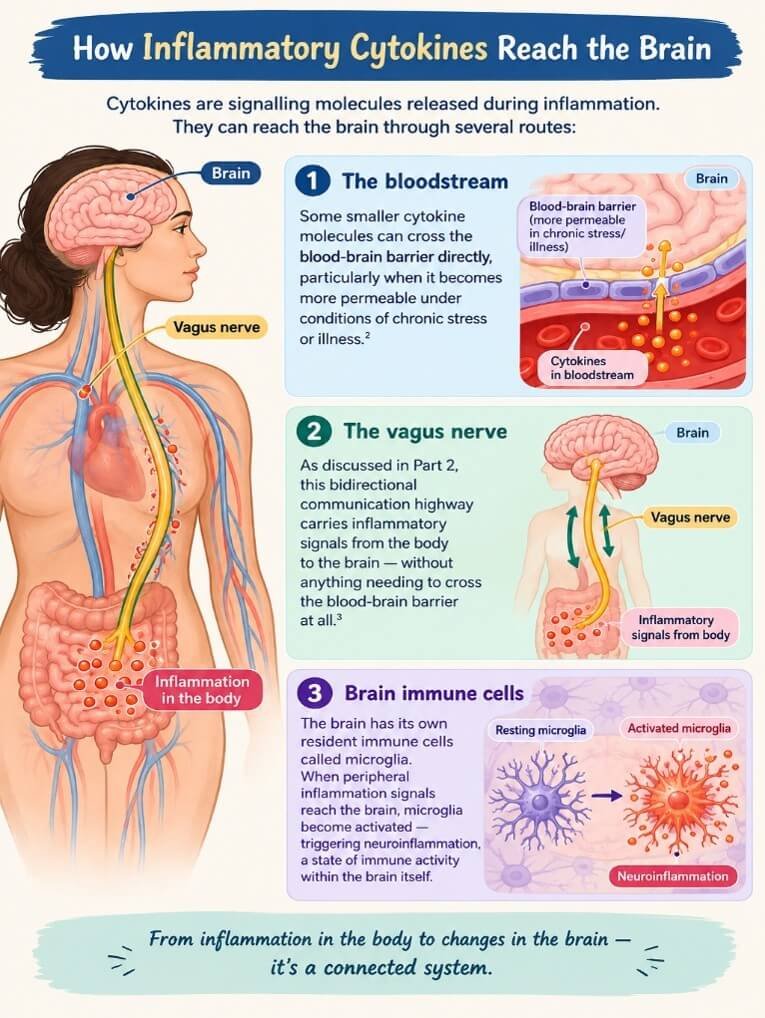
Inflammatory cytokines produced in the body reach the brain through several routes:
- The bloodstream. Some smaller cytokine molecules can cross the blood-brain barrier directly, particularly when it becomes more permeable under conditions of chronic stress or illness.2
- The vagus nerve. As discussed in Part 2, this bidirectional communication highway carries inflammatory signals from the body to the brain — without anything needing to cross the blood-brain barrier at all.3
- Brain immune cells. The brain has its own resident immune cells called microglia. When peripheral inflammation signals reach the brain, microglia become activated — triggering neuroinflammation, a state of immune activity within the brain itself.2
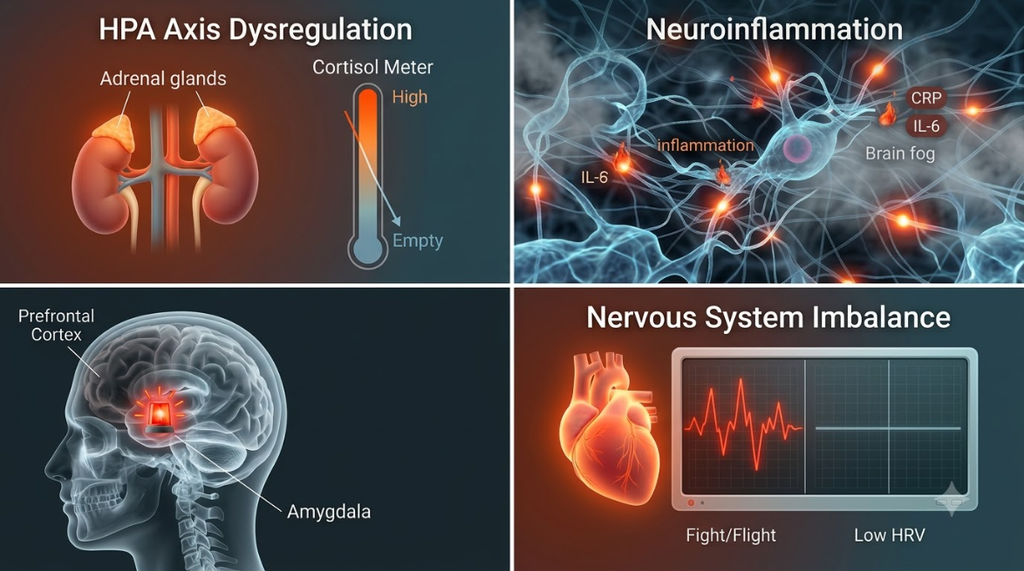
Once inflammatory signals reach the brain, they interfere with the systems that regulate mood, motivation, and cognition. This process is known as neuroinflammation — and it is where the connection to mental health becomes not just plausible, but scientifically compelling.
The Inflammation-Depression Link
Inflammatory cytokines interfere with neurotransmitters such as serotonin and dopamine — the chemicals that regulate mood, motivation, pleasure, and emotional resilience. When inflammation remains chronically elevated, the neurochemical environment shifts in ways that closely mirror depression.
The evidence for this link has accumulated from multiple directions:
Elevated inflammatory markers in depression. Numerous studies have found higher levels of CRP, IL-6, and TNF-α in people with major depression compared with those without — replicated across dozens of studies and multiple populations.4
Inducing inflammation induces depression. When healthy volunteers are given low-dose endotoxin injections to experimentally induce inflammation, they reliably develop symptoms that mirror depression — low mood, fatigue, social withdrawal, reduced motivation, and anhedonia (loss of pleasure). These symptoms resolve as the inflammatory response subsides.5
Anti-inflammatory treatments improve mood. In clinical trials, anti-inflammatory medications have shown antidepressant effects in people with elevated inflammatory markers — particularly those who did not respond well to standard antidepressants. This suggests that for a significant subset of people, inflammation may be a primary driver of their depression, not merely a correlate.6
The serotonin connection. Inflammatory cytokines activate an enzyme called indoleamine 2,3-dioxygenase (IDO), which diverts tryptophan — the amino acid precursor to serotonin — away from serotonin production and toward a different metabolic pathway. The result is reduced serotonin availability in the brain — one of the mechanisms by which chronic inflammation may contribute directly to the neurochemical changes associated with depression.4
It is important to be precise: not all depression is inflammatory in origin. Depression is a heterogeneous condition with multiple causes, and inflammation is one contributing pathway, not a universal explanation. However, for a significant subset of people — particularly those with treatment-resistant depression, high CRP levels, or depression accompanied by physical symptoms such as fatigue and brain fog — the inflammatory pathway may be central.
Inflammation and the Brain: Beyond Depression
The effects of neuroinflammation extend beyond mood. Chronic inflammation in the brain affects several cognitive and neurological functions:
Brain fog. One of the most common complaints among people with chronic inflammation is brain fog — a term describing poor concentration, forgetfulness, slower thinking, difficulty finding words, and mental fatigue. These symptoms are driven by cytokine activity in the brain, specifically the effect of inflammatory molecules on neural signalling speed and efficiency. When inflammation is chronic, so is the fog.2
Memory and learning. The hippocampus — the brain region, critical for memory formation and learning — is particularly vulnerable to inflammatory damage. Microglial activation in the hippocampus disrupts the formation of new memories and has been linked to cognitive decline in chronic inflammatory conditions.3
Anxiety. Neuroinflammation activates threat-detection circuitry, including the amygdala we discussed in Part 3. Elevated cytokine levels have been associated with heightened vigilance, excessive worrying, irritability, and difficulty relaxing. Inflammation does not necessarily cause anxiety on its own, but it may significantly amplify existing stress responses.5
Sleep disruption. Inflammatory cytokines alter sleep architecture — reducing slow-wave (deep) sleep and increasing nighttime wakefulness. This creates a vicious cycle: poor sleep elevates inflammatory markers, which further disrupts sleep, which reduces cortisol effectiveness, slows stress recovery, and erodes emotional resilience.1
The Stress-Inflammation Loop
If you have been reading this series, you will recognise something familiar in all of this.
Chronic psychological stress (the subject of Part 1) is one of the most potent drivers of chronic low-grade inflammation. The mechanism involves the HPA axis: sustained cortisol elevation over time, causes immune cells to become resistant to cortisol’s anti-inflammatory signals. The result is a paradox — high cortisol alongside high inflammation, when normally cortisol suppresses inflammatory activity.1
Simultaneously, inflammation activates the amygdala and sensitizes the threat-response system — making the brain more reactive to stress. Which drives more cortisol production. Which drives more inflammation.
Stress → Inflammation → Brain changes → More stress → Poor sleep → More inflammation
The loop is self-sustaining and difficult to interrupt from either end alone.
This is not a counsel of despair. It is an explanation — and explanations point toward solutions.
What Drives Chronic Inflammation — And What Reduces It
Many everyday habits silently fuel chronic inflammation. These include chronic psychological stress, poor sleep, sedentary behavior, an ultra-processed diet, social isolation, obesity, excess sugar and alcohol, smoking, environmental pollution, untreated gum disease, and persistent infections. The encouraging news is that many of these factors are modifiable.
What evidence supports for reducing it:
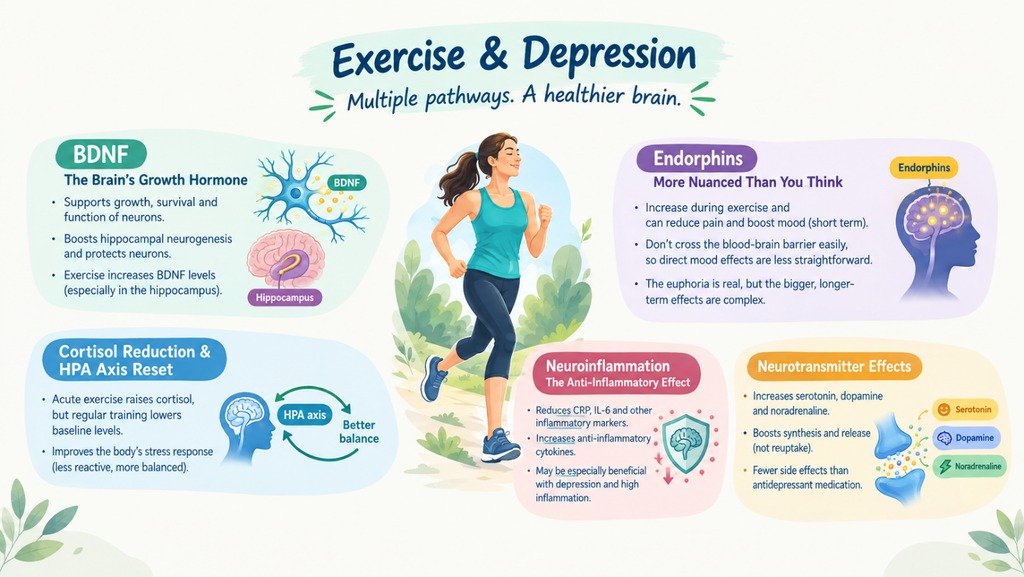
Exercise. Regular moderate aerobic exercise is one of the most potent anti-inflammatory interventions available. It reduces CRP and IL-6, stimulates anti-inflammatory cytokine production, and — critically — crosses the blood-brain barrier through BDNF (brain-derived neurotrophic factor) to support neuronal health directly. Even 20 minutes of moderate exercise produces measurable anti-inflammatory effects.7
Sleep. Prioritizing 7–9 hours of quality sleep per night consistently reduces inflammatory markers. As covered in Part 1, sleep is not passive recovery — it is active immune regulation. The glymphatic system clears inflammatory debris from the brain during deep sleep.
Anti-inflammatory diet. A diet rich in omega-3 fatty acids (oily fish, walnuts, flaxseed), polyphenols (berries, olive oil, dark chocolate, green tea), and fibre (vegetables, legumes, wholegrains) has robust evidence for reducing systemic inflammatory markers. The Mediterranean diet pattern has been most extensively studied and shows consistent associations with lower CRP and reduced depression risk.6
Stress management. Mindfulness-based stress reduction (MBSR) has been shown to reduce inflammatory markers including CRP and IL-6 in several clinical trials. The mechanism runs through the HPA axis — reducing cortisol dysregulation reduces the inflammatory cascade it drives.
Social connection. Genuine social connection — not passive social media use — is associated with lower inflammatory markers. The evidence consistently shows that social isolation is an inflammatory state, and belonging is biologically protective.
Diseases Associated with Chronic Inflammation
Scientists now recognize chronic inflammation as a common biological factor in numerous conditions, including depression, anxiety disorders, Alzheimer’s disease, Parkinson’s disease, heart disease, type 2 diabetes, obesity, autoimmune diseases, rheumatoid arthritis, inflammatory
bowel disease, irritable bowel syndrome, and chronic pain disorders. Inflammation is rarely the only cause, but it often contributes to disease progression.
The Future of Mental Health Is Whole-Body Health
Scientists increasingly believe that mental health cannot be understood by studying the brain alone. Mental wellbeing reflects interactions among the immune system, the gut microbiome, hormones, metabolism, sleep, nutrition, and the nervous system. This integrated perspective is transforming medicine — and treating inflammation may become an important component of preventing and managing both physical and mental illness.
The Bottom Line
When you experience persistent fatigue, brain fog, digestive issues, low mood, or chronic aches, it is easy to view them as unrelated problems. In fact, they may all stem from the same underlying biological process.
The same inflammatory process that damages your joints and your arteries is the same process that alters your mood, disrupts your sleep, impairs your memory, and amplifies your anxiety. Chronic inflammation acts as a bridge between the body and the brain. It shapes how we think, feel, remember, and respond to stress.
The good news is that inflammation is not fixed. It responds to lifestyle — to what we eat, how we move, how we sleep, how we manage stress, and how we connect with others. These are not soft suggestions. They are anti-inflammatory interventions with measurable effects on the biology of the brain.
Your body and mind are not separate systems. They are two sides of the same biology.
Frequently Asked Questions
Can chronic inflammation affect mental health? Yes. Chronic inflammation can alter brain chemistry, neurotransmitter activity, and the stress response. Studies have linked persistent inflammation with depression, anxiety, brain fog, fatigue, and cognitive decline.
What are the symptoms of chronic inflammation? Common symptoms include persistent fatigue, joint pain, digestive problems, brain fog, mood changes, poor sleep, frequent infections, and unexplained body aches. Some people may have chronic inflammation without noticeable symptoms.
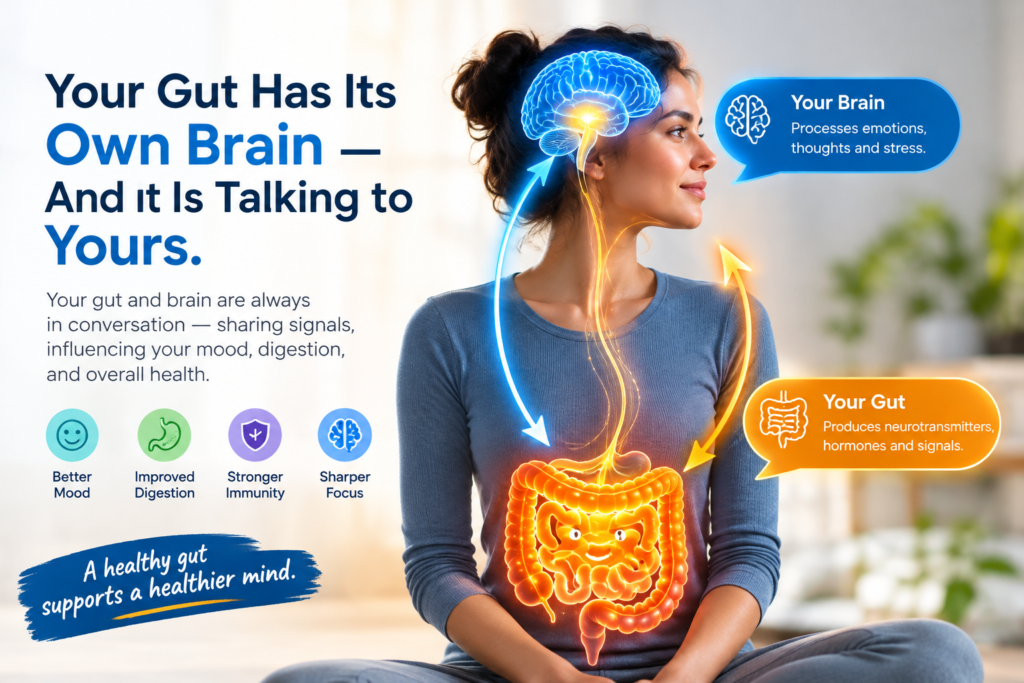
How does the gut influence inflammation and the brain? The gut contains a large portion of the body’s immune system and communicates with the brain through the gut-brain axis. An unhealthy gut microbiome can promote inflammation, which may affect mood, memory, and mental wellbeing.
Can reducing inflammation improve mood? Lifestyle changes such as eating an anti-inflammatory diet, exercising regularly, getting enough sleep, managing stress, and supporting gut health may reduce inflammation and improve overall emotional wellbeing. These approaches complement — not replace — professional treatment for mental health conditions.
What foods help reduce chronic inflammation? Foods associated with lower inflammation include fruits, vegetables, whole grains, legumes, nuts, seeds, olive oil, fatty fish, and fermented foods. Limiting ultra-processed foods and sugary drinks may also help.
Next in the series: Is burnout a real medical diagnosis? — What the WHO classification actually means, how to tell the difference between burnout and depression, and what the science says about recovery.
If you found this useful, subscribe to weekly evidence-based posts on mental health and mind-body science at The Health Explainer. If you are experiencing symptoms of chronic illness, depression, or anxiety, please speak with a qualified healthcare professional.
Watch Now – How chronic inflammation connects your body and mind
References
- Furman D, Campisi J, Verdin E, et al. Chronic inflammation in the etiology of disease across the life span. Nature Medicine. 2019;25(12):1822–32.
- Haroon E, Raison CL, Miller AH. Psychoneuroimmunology meets neuropsychopharmacology: translational implications of the impact of inflammation on behavior. Neuropsychopharmacology. 2012;37(1):137–62.
- Pavlov VA, Tracey KJ. The vagus nerve and the inflammatory reflex — linking immunity and metabolism. Nature Reviews Endocrinology. 2012;8(12):743–54.
- Miller AH, Raison CL. The role of inflammation in depression: from evolutionary imperative to modern treatment target. Nature Reviews Immunology. 2016;16(1):22–34.
- Eisenberger NI, Moieni M, Inagaki TK, Muscatell KA, Irwin MR. In sickness and in health: the co-regulation of inflammation and social behavior. Neuropsychopharmacology. 2017;42(1):242–53.
- Köhler CA, Freitas TH, Maes M, et al. Peripheral cytokine and chemokine alterations in depression: a meta-analysis of 82 studies. Acta Psychiatrica Scandinavica. 2017;135(5):373–87.
- Gleeson M, Bishop NC, Stensel DJ, Lindley MR, Mastana SS, Nimmo MA. The anti-inflammatory effects of exercise: mechanisms and implications for the prevention and treatment of disease. Nature Reviews Immunology. 2011;11(9):607–15.