By Shilpa Khirbat | Medical Writer & Health Blogger | What Happens During a Panic Attack
Have you noticed how mental stress affects both mind and body? Almost everyone feels physical symptoms during stressful times. For instance,
- An experience of sudden knots in the stomach when a big presentation is looming
- Your chest felt tight when a family crisis unfolded.
- “You come down with a cold right when a deadline is looming — and you can’t explain why” This is not weakness or ‘all in your head.’ It’s your biology doing what it was designed to do—but for a different world.
The Original Purpose of Stress
“Stress is part of the body’s ancient survival mechanism known as the ‘fight-or-flight’1 response.” When your brain perceives a threat, it triggers a rapid cascade of hormonal and neurological signals designed to keep you alive.
Here’s what happens in the first few seconds of a stress response:
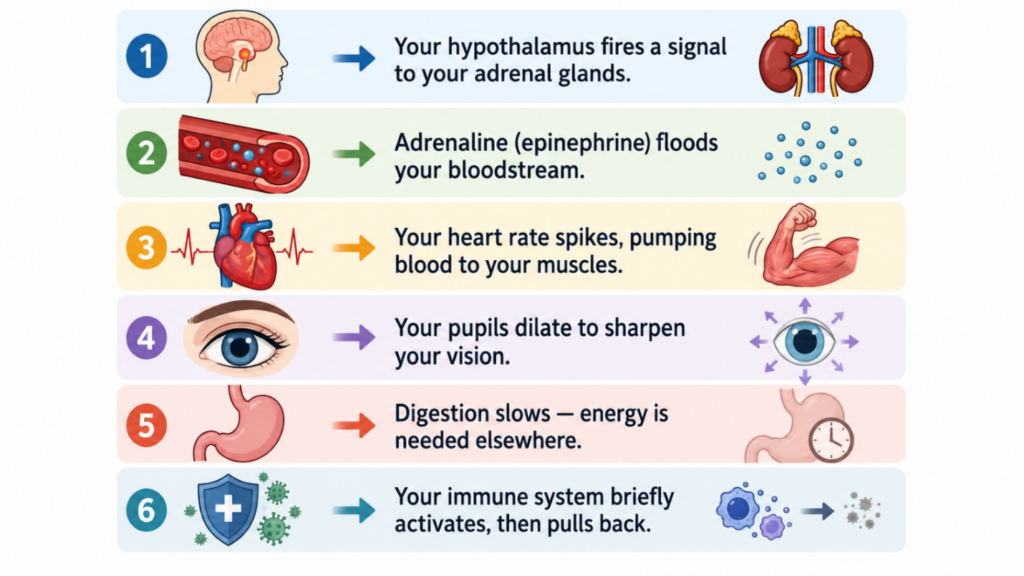
This kind of response pathway works best when one has to survive and escape from a predator. However, current lifestyle demands situations like crossing the traffic to arrive on time or answering work emails at 11 pm.
The body doesn’t distinguish between a lion and a looming deadline. To your nervous system, a threat is a threat.
Cortisol: The Hormone Nobody Talks About Honestly
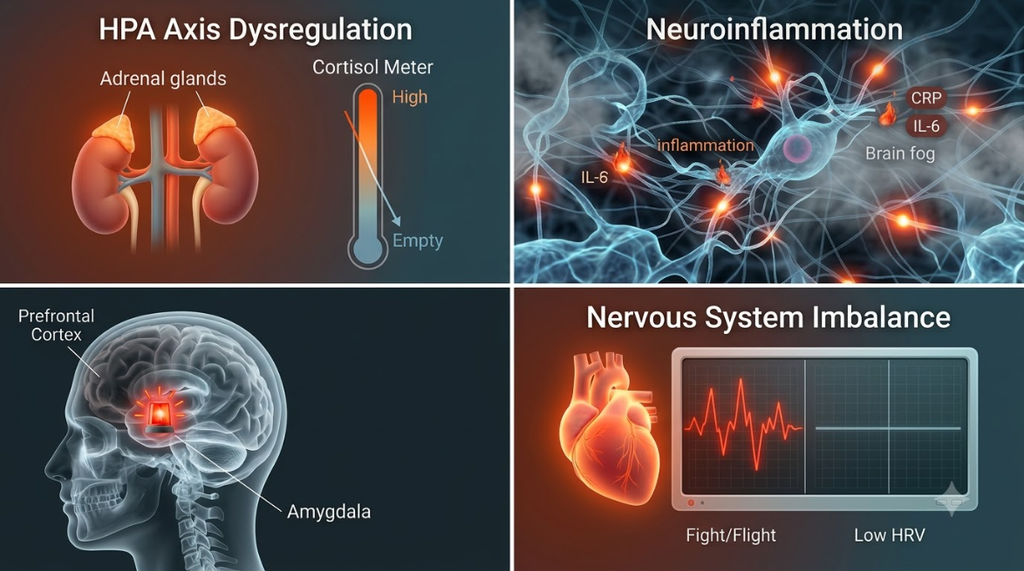
Cortisol is more important in stress biochemistry, causing most of the long-term damage.2 It acts more slowly than adrenaline but keeps the body in a mobilized state. For instance, maintaining a higher blood sugar level keeps us attentive or alert and suppresses the biochemical functions which are not immediately required.
This type of functioning is required for a short term to help us focus under pressure and provide the immediate energy in response to a particular situation. However, in today’s lifestyle, it never fully switches off and keeps the body in a stressed state for longer durations.
Chronic stress means chronically elevated cortisol, and the chronically elevated cortisol interferes with almost every major system in the body:
- Immune function3 — cortisol is anti-inflammatory in the short term, but long-term elevation suppresses immune activity, leaving you more vulnerable to infections and slower to heal
- Sleep architecture4 — cortisol’s daily natural rhythm is highest or at peak in the morning and drops at night. However, during a chronic stress state, this rhythm is disrupted, leading to disturbed sleep and affecting recovery.
- Metabolism5 — Continuous higher cortisol levels slow your metabolic speed and promote fat storage, particularly around the abdomen, leading to higher blood sugar levels.
- Cardiovascular health6 — high cortisol level keeps blood pressure raised, hence promotes arterial inflammation, which disturbs cardiovascular health.
- Brain structure —Long-term cortisol exposure shrinks the hippocampus, which is involved in memory and emotional regulation. Hence, the structural changes in the brain impair memory formation and cognitive function.
These measurable physiological changes have been documented in peer-reviewed research, visible on brain scans and blood panels.
Why You Keep Getting Sick When You’re Stressed
In today’s world, every stressed person is experiencing some sort of illness, or it has been reported that the recovery of stressed people happens more slowly than that of mentally relaxed and positive people. There’s a well-established biological reason for this.
Chronically elevated cortisol suppresses the production of pro-inflammatory cytokines; the signalling molecules required by the immune system to mount a defence against pathogens. Simultaneously, sleep gets disturbed, leading to limited repair time for the immune system.
Consequently, immune defences are lowered significantly when you need them the most.
Furthermore, stress activates the sympathetic nervous system (the “fight or flight” side), which diverts resources away from the parasympathetic nervous system — the “rest and digest” side responsible for repair, recovery, and immune surveillance.
You cannot be in both states simultaneously. Hence, a body that never fully shifts into parasympathetic mode (Rest and Digest) is a body that never fully recovers.
This is why stress brings illness, and the body finally “notices” the virus it was holding at bay.
The Gut-Brain Axis: A Two-Way Street
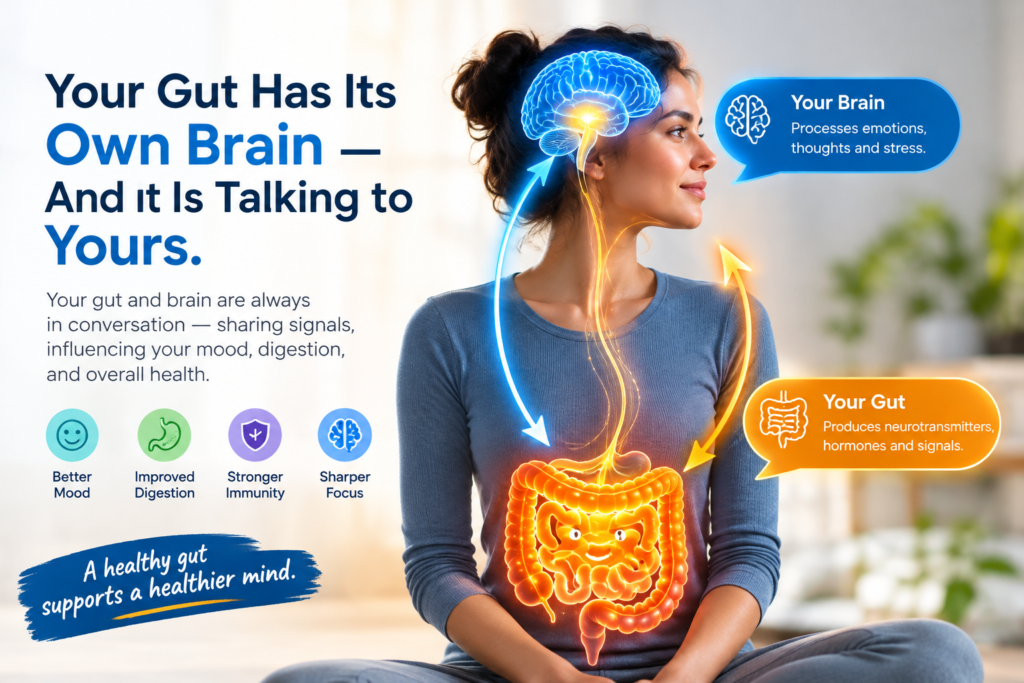
The gastrointestinal system has its own nervous system, also known as the enteric nervous system or the second brain of your gut. It contains more than 100 million nerve cells. It communicates constantly with your brain via the vagus nerve and a chemical highway of neurotransmitters and hormones.
This bidirectional communication system is called the gut-brain axis, and it is one of the most compelling frontiers in stress research7:
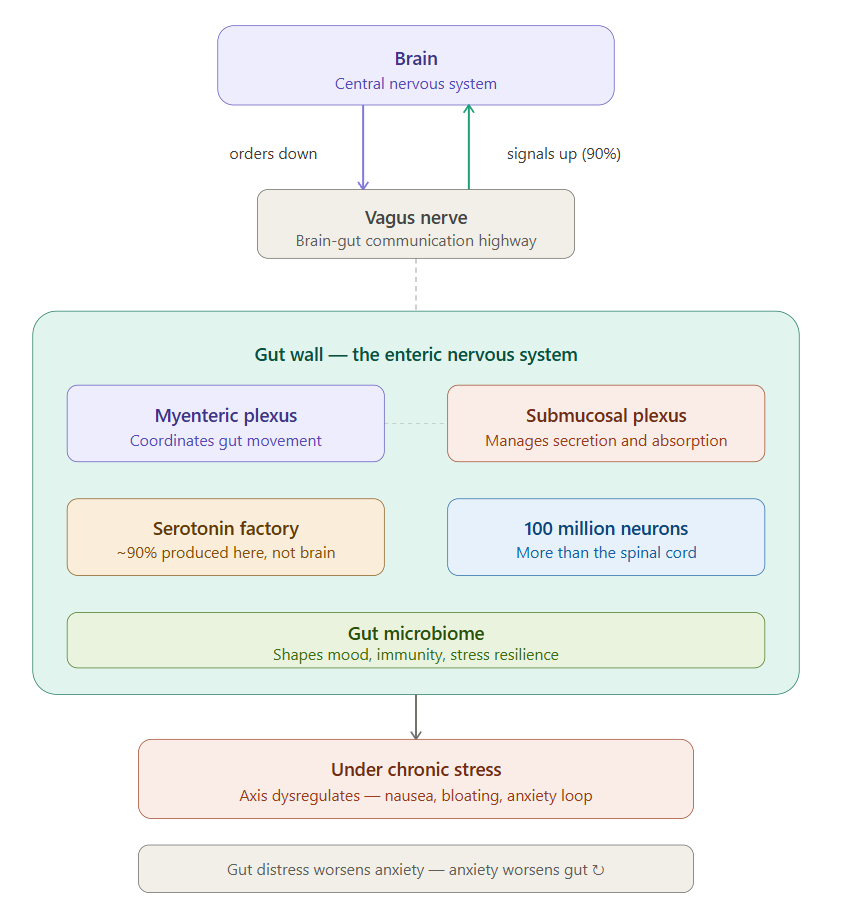
During stress:
- Gut motility changes (hence diarrhoea, constipation, or both)
- The gut lining can become more permeable (leaky gut), allowing bacterial products and inflammatory molecules to enter the bloodstream and trigger systemic inflammation.
- The composition of your gut microbiome changes, and hence stress alters the type of bacterial species that thrive.
- Serotonin production is affected — notably, around 90% of the body’s serotonin is produced in the gut, not the brain.
This explains why anxiety leads to nausea, bloating, cramping or urgency. Your gut is not reacting emotionally. It is responding neurologically, following a signal chain that began in your brain. This relationship occurs conversely as well: a disrupted gut microbiome can worsen anxiety and low mood, creating a feedback loop that is difficult to interrupt without addressing both ends.
Stress and the Heart: More Than a Figure of Speech
Poetic phrases like “heart-breaking” or “dying of fright” are actually physiological. The cardiovascular system is exquisitely sensitive to psychological stress.
Takotsubo cardiomyopathy — also known as “broken heart syndrome” — is a real, documented condition in which sudden emotional shock causes a temporary weakening of the heart muscle that mimics a heart attack. It can occur after bereavement, a shocking diagnosis, or extreme fright.
More commonly, chronic psychological stress is an independent risk factor for cardiovascular disease. The mechanisms include:
- Persistent elevation of blood pressure and heart rate
- Increased platelet aggregation (blood becomes “stickier,” raising clot risk)
- Endothelial dysfunction — damage to the inner lining of blood vessels
- Systemic inflammation, which accelerates atherosclerosis (arterial plaque buildup)
A landmark 2017 study published in The Lancet identified a mechanism linking stress to heart disease via the amygdala — the brain’s threat-detection centre. Higher amygdala activity was associated with greater bone marrow activity, elevated inflammatory markers, and significantly increased cardiovascular risk.8 The body’s alarm system, left chronically activated, begins to damage the very heart it was trying to protect.
What You Can Actually Do
In summary, psychological stress actually causes a measurable, physical harm. However, it is equally clear that these effects are not inevitable or irreversible. The nervous system is plastic, which can be recalibrated.
Here is what the evidence supports:
Breathing activates your parasympathetic nervous system: The fastest evidence-based tool is controlled breathing. Specifically, extending the exhale longer than the inhale activates the vagus nerve to trigger a parasympathetic response. A simple starting point is inhale for 4 counts, exhale for 6–8 counts and do this for five minutes.
Treat sleep as a medical intervention: Sleep is not passive recovery; it is when cortisol resets, the immune system repairs, and the brain consolidates emotional memories. Chronic poor sleep and chronic stress amplify each other. Protecting sleep is one of the highest-leverage things you can do.
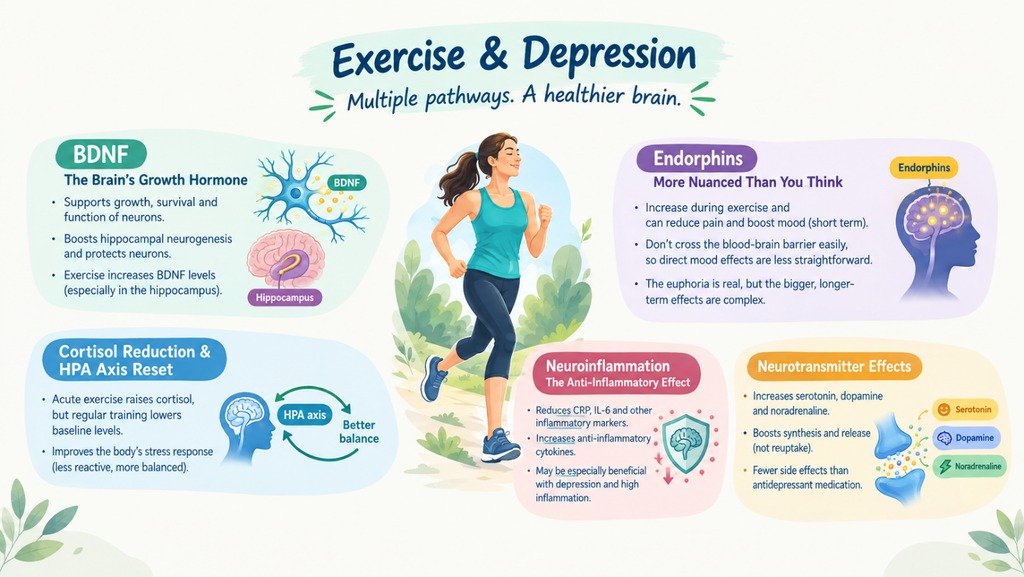
Exercise: Exercise is one of the few interventions that directly reduces cortisol, elevates mood-regulating neurotransmitters and improves immune function simultaneously. Even 20–30 minutes of moderate aerobic exercise has measurable effects on stress hormones within a single session.
Support your Gut: A diet rich in fermented foods, fiber, and polyphenols supports a diverse gut microbiome, which in turn supports mood regulation and stress resilience. This is an emerging but increasingly robust area of research.
Know when to seek help. If you recognize yourself in this article — if stress has become a persistent state rather than a passing response — it is worth talking to a doctor or mental health professional. The physical consequences described here are real, and they are treatable.
The Bottom Line
Stress is not a personal failing or a vague emotional state. It is a biochemical cascade with measurable consequences for your immune system, cardiovascular system, gut, brain, and sleep architecture.
When you say stress is making you sick, you are almost certainly right.
The good news is that the same body that mounts this response is also capable of calming it. Understanding the mechanism is the first step — not just intellectually, but because knowing why something works makes you far more likely to actually do it.
Your body is not working against you. It is working exactly as designed. The task is learning to work with it.
Mental Stress, Mental Stress, Mental Stress, Mental Stress, Mental Stress, Mental Stress, Mental Stress
Mental Stress, Mental Stress, Mental Stress, Mental Stress, Mental Stress, Mental Stress, Mental Stress, Mental Stress, Mental Stress