By Shilpa Khirbat | Medical Writer & Health Blogger
Part of the Mind-Body Series at The Health Explainer. Catch up here: [Part 1 — Why Mental Stress Makes You Physically Sick] | [Part 2 — Your Gut Has Its Own Brain] | [Part 3 — What Happens to Your Brain During a Panic Attack] | [Part 4 — How Chronic Inflammation Connects Body and Mind] | [Part 5 — Is Burnout a Real Medical Diagnosis?] | [Part 6 — The Science of Breathwork] | [Part 7 — Do Magnesium Supplements Actually Reduce Anxiety?] | [Part 8 — Exercise as Antidepressant]
You can be surrounded by people and still feel profoundly alone. A busy household, a packed calendar, or hundreds of online followers do not always create genuine connection. While solitude can be comforting and restorative, loneliness carries a deeper sense of being unseen, disconnected, and apart from others. Many of us think of loneliness as an emotion. Increasingly, science suggests it is much more than that. Chronic loneliness affects the body’s response to stress, immune system, cardiovascular health, and even lifespan.
In 2023, the World Health Organization identified loneliness as a global public health concern.1 The question is no longer whether loneliness hurts. The question is: what exactly does it do to the body? Let’s explore the biology behind one of the most common human experiences.
The Numbers Behind the Loneliness Epidemic
Before exploring the biology, it’s worth understanding the scale of the problem.
📊 More than 1 in 2 Americans feel lonely
A 2018 survey of over 20,000 U.S. adults found that more than half reported sometimes or always feeling alone. Surprisingly, the highest levels of loneliness were reported by young adults aged 18 to 22, not older adults as many people assume.2
🌍 Nearly 1 in 4 adults worldwide feel lonely
A 2023 Gallup poll found that almost a quarter of adults globally described themselves as very or fairly lonely, with younger adults experiencing loneliness more often than older generations.
⚠️ Loneliness is becoming a global public health concern
These aren’t isolated experiences affecting a small group of people. They represent hundreds of millions of individuals worldwide, and the health consequences extend far beyond emotional well-being.
Loneliness Is Not Just an Emotion — It Is a Biological State
The most important conceptual shift in understanding loneliness is recognizing that it is not simply a subjective feeling. It is a distinct biological state that activates specific physiological systems in ways that parallel other recognized health threats.
The pioneering research of neuroscientist John Cacioppo at the University of Chicago fundamentally changed how science understands loneliness. Over decades of work, Cacioppo and colleagues demonstrated that chronic loneliness activates a cascade of biological responses strikingly similar to the stress response described in Part 1 — but with critical differences that make loneliness particularly damaging over time. 3
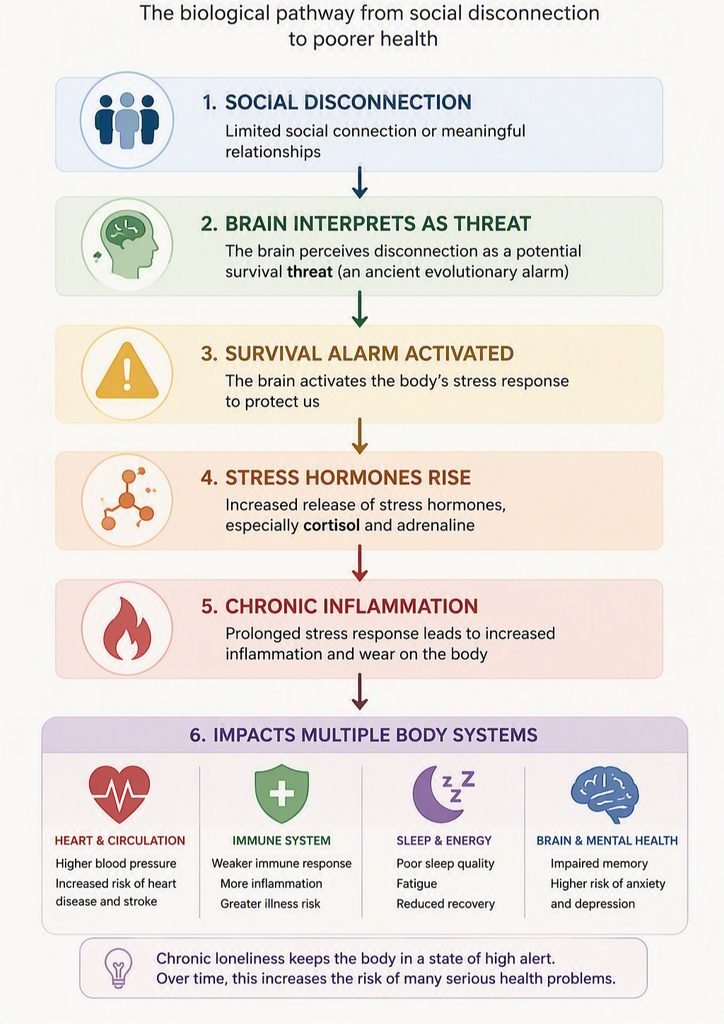
The key insight is evolutionary: social disconnection was dangerous. Humans evolved as deeply social animals — isolated from the group, an individual was vulnerable to predators, starvation, and environmental threat. The brain developed a biological alarm system for social disconnection, just as it developed one for physical pain.
That alarm system is still running. In a modern context where chronic loneliness is common but rarely acutely life-threatening, it runs continuously producing the same stress-biology as a threat that never resolves.
How Loneliness Affects the Body
Cortisol and the HPA Axis
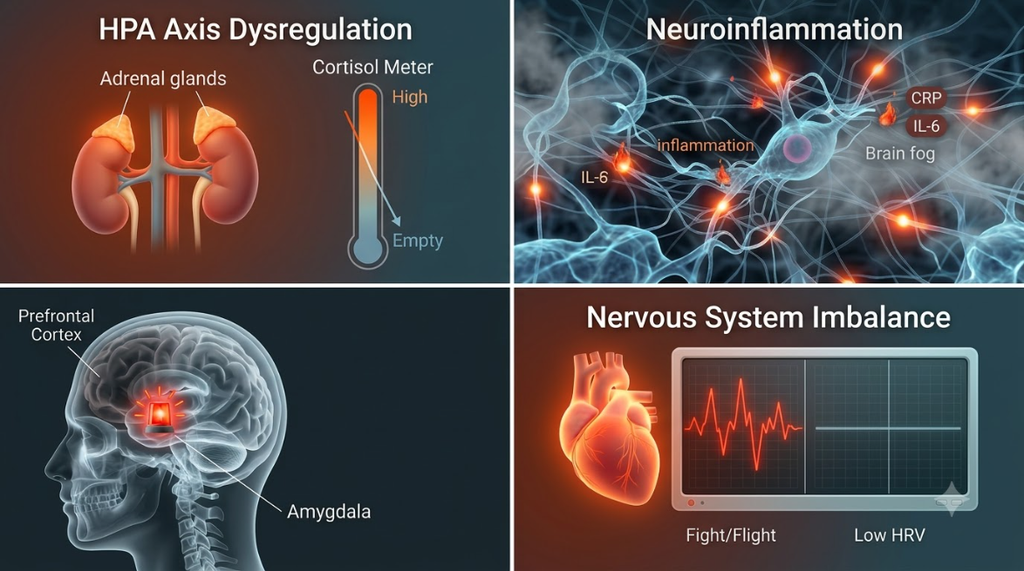
Chronically lonely individuals show persistently elevated cortisol levels and altered HPA axis activity — the same dysregulation associated with chronic stress and burnout covered throughout this series.3
The mechanism is direct: the perception of social threat activates the amygdala and triggers the HPA axis. Unlike the acute stress of a deadline or a confrontation — which resolves — the perception of chronic social disconnection does not resolve. The HPA axis remains activated. Cortisol remains elevated. And the downstream consequences described in Part 1 — immune suppression, sleep disruption, metabolic dysregulation, cardiovascular strain — accumulate over time.
Inflammatory Markers — CRP, IL-6, TNF-α
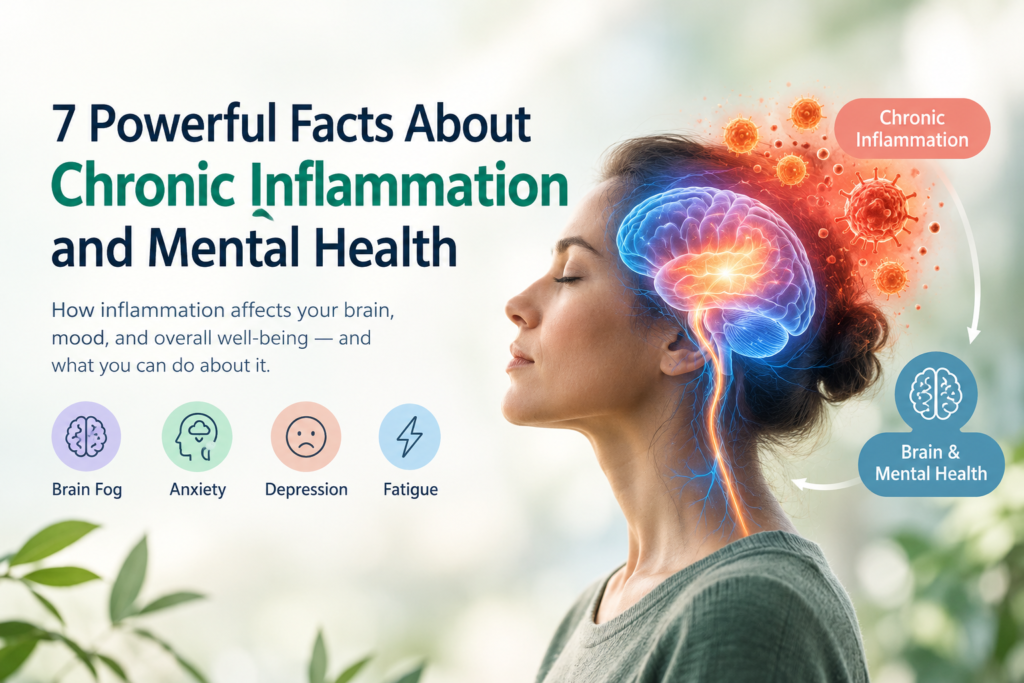
Loneliness is an inflammatory state. Multiple studies have found elevated levels of CRP, IL-6, and TNF-α in chronically lonely individuals — the same inflammatory markers associated with depression, cognitive decline, and cardiovascular disease in Part 4.4
Cacioppo’s research identified a specific gene expression pattern in lonely individuals — a shift toward increased expression of pro-inflammatory genes and decreased expression of antiviral genes. Lonely people are not just more stressed. They are, at a genetic expression level, differently wired in ways that make them more vulnerable to inflammation and less capable of fighting viral infections. 3
This creates one of the most striking findings in loneliness research: loneliness does not merely correlate with poor health — it appears to shift the body’s biological priorities in ways that prioritise short-term threat response over long-term health maintenance.
Immune Suppression and Slower Healing
Consistent with its inflammatory profile, loneliness is associated with impaired immune function. Lonely individuals show reduced natural killer cell activity, slower wound healing, and reduced antibody response to vaccines compared with socially connected individuals.5
Studies have found that cancer patients with strong social support networks have significantly better survival outcomes than those who are socially isolated — a finding replicated across multiple cancer types and other serious illnesses. The immune system, it turns out, is not indifferent to whether you feel connected.
Cardiovascular Risk
The cardiovascular consequences of loneliness are among the most extensively documented. A meta-analysis published in Heart in 2016 found that loneliness and social isolation were associated with a 29% increased risk of coronary heart disease and a 32% increased risk of stroke — independent of other known risk factors including smoking, obesity, and physical inactivity.6Holt-Lunstad and colleagues published a landmark meta-analysis in 2015 showing that social isolation increased the risk of premature mortality by approximately 26% comparable in effect size to smoking 15 cigarettes per day. 7 The biology behind that figure, described across this series, makes it entirely plausible.
What Loneliness Does to the Brain:
Loneliness does not just affect how we feel. Over time, it can change how the brain processes the social world, regulates sleep, and supports cognitive health.
1. The Brain Becomes More Alert to Social Threats
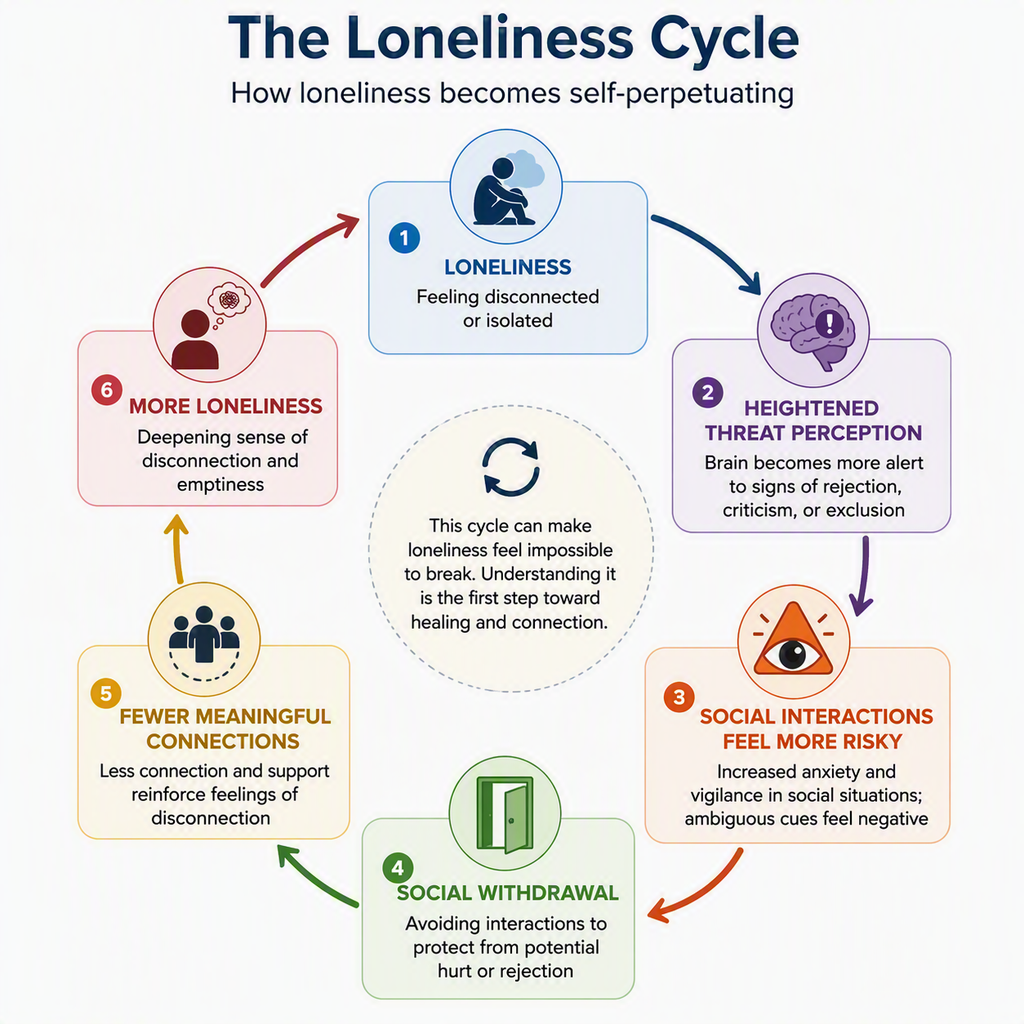
One of the most surprising findings in loneliness research is that lonely people do not become less aware of others. In many cases, they become more sensitive to social signals, especially negative ones.
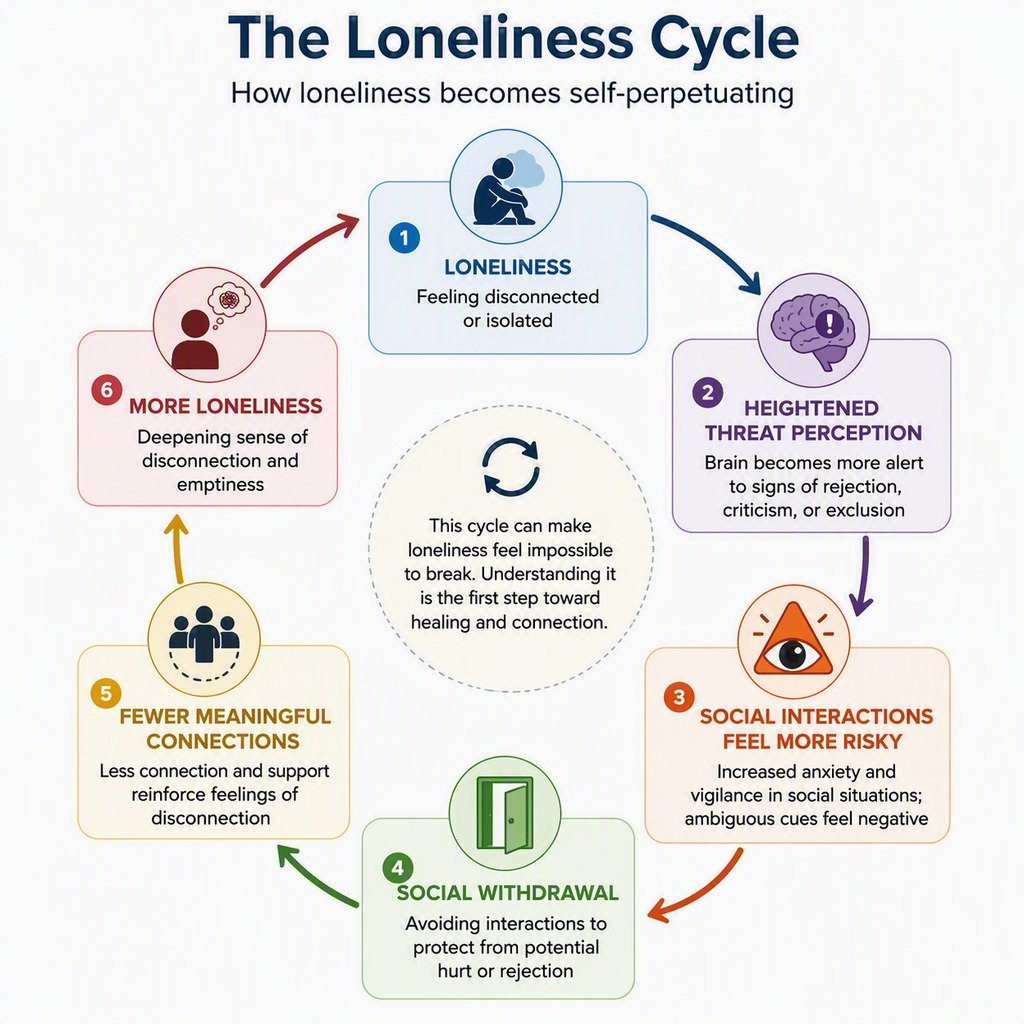
Research led by John Cacioppo found that chronic loneliness is associated with increased activity in the amygdala, the brain’s threat-detection center.3 As a result, the brain becomes more alert to signs of rejection, criticism, or exclusion. A delayed text message, a brief response, or an ambiguous facial expression may be interpreted more negatively than intended.
This heightened vigilance can make social interactions feel stressful rather than rewarding, increasing the likelihood of withdrawal and reinforcing the cycle of loneliness.
2. Sleep Becomes Less Restorative
Loneliness also affects what happens after we fall asleep.
Studies show that lonely individuals often experience more fragmented sleep, less restorative deep sleep, and greater daytime fatigue, even when they spend the same number of hours in bed as other people.4 Scientists believe this is linked to the brain’s persistent state of alertness. If the brain perceives isolation as a potential threat, it remains slightly “on guard,” making truly restorative sleep harder to achieve. Poor sleep then feeds back into the problem by increasing stress hormones, inflammation, and emotional reactivity.
3. Long-Term Effects on Cognitive Health
The effects of chronic loneliness may extend far beyond mood and sleep. Long-term studies have identified social isolation and chronic loneliness as important risk factors for cognitive decline and dementia. Some research suggests that people experiencing persistent loneliness may have up to a 50% greater risk of developing dementia than those who maintain strong social connections.5 While researchers are still exploring the exact mechanisms, chronic stress, inflammation, poor sleep, and reduced cognitive stimulation are all thought to play a role. The mechanisms likely include the cumulative effects of chronic HPA axis activation on hippocampal volume, chronic neuroinflammation, poor sleep, and reduced cognitive engagement — all of which accelerate the neurodegeneration associated with Alzheimer’s disease and other dementias.
Loneliness Leaves a Biological Footprint
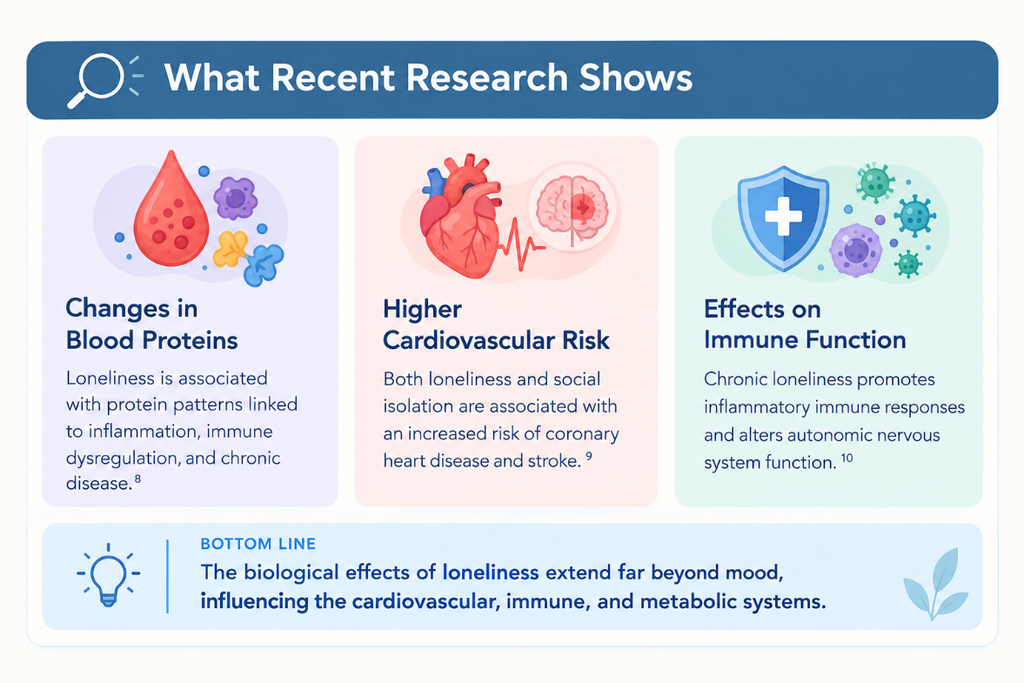
For years, scientists suspected that loneliness affects physical health. Recent research has shown just how deeply those effects run. A major 2025 study found that loneliness and social isolation are associated with measurable changes in hundreds of proteins circulating in the bloodstream. Many of these proteins are involved in inflammation, immune function, and the body’s response to infection. More than half were linked to a higher risk of conditions such as cardiovascular disease, type 2 diabetes, stroke, and premature death during long-term follow-up.8
The findings are consistent with a growing body of research. Large reviews published in 2026 concluded that both loneliness and social isolation are independent risk factors for cardiovascular disease, including coronary artery disease and stroke.9 Researchers have also identified changes in the nervous and immune systems that promote chronic inflammation and place additional strain on the heart and blood vessels.10
Taken together, the evidence suggests that loneliness is not simply an emotional experience. It is a biological condition that can influence health throughout the body.
The Social Media Paradox — Connected but Still Lonely
Any honest discussion of loneliness must address social media, not with reflexive condemnation, but with the nuance the evidence actually supports.
Passive social media consumption — scrolling through others’ curated lives without active engagement — is consistently associated with increased loneliness and reduced wellbeing.
Active, reciprocal social media engagement — direct messaging, group participation, genuine interaction — shows more neutral or even modestly positive associations. 1
The critical variable is not the platform but the quality of the interaction. The brain’s social reward system — driven by oxytocin, dopamine, and endorphin release — responds to genuine connection: being seen, heard, understood, and valued. It does not respond to likes, follower counts, or passive observation of others’ social lives in the same way.
What Actually Helps — The Evidence on Connection
The good news embedded in all of this is significant: because loneliness is a biological state, it responds to biological intervention.
Quality over quantity. The research consistently shows that what matters for health outcomes is the perceived quality of social relationships, not the number. One or two deeply supportive relationships produce greater health benefits than a large but superficial social network.7
Physical presence. Face-to-face interaction produces the strongest neurobiological response — oxytocin release, vagal activation, and synchronized physiological states between individuals. Digital interaction produces some benefits but does not fully replicate the biology of physical co-presence.
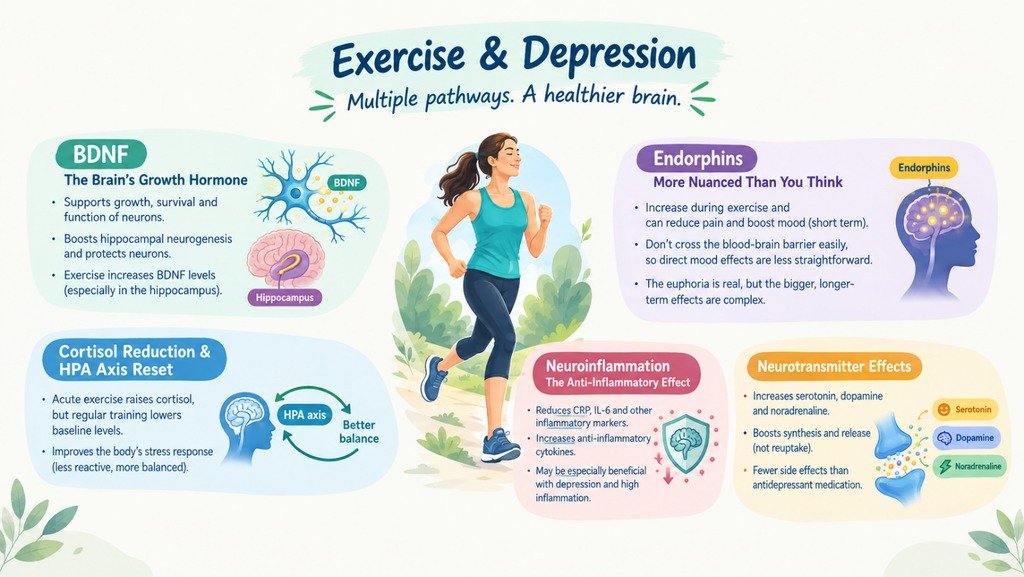
Shared purpose and activity. Connections formed through shared activities like exercise groups, volunteer work, creative pursuits, and/or community projects tend to be more resilient and health-promoting than connections formed primarily around conversation. The social exercise effect noted in Part 8 is directly relevant here.
Reducing hypervigilance. For people whose loneliness has become chronic and self-perpetuating, the barrier is often perception rather than opportunity — the lonely brain’s tendency to interpret social situations as threatening. CBT techniques addressing negative social cognitions, and gradual exposure to social situations in low-stakes environments, have evidence for breaking this cycle.3
Community and belonging. The most protective form of social connection appears to be a sense of belonging to a community — a group with shared values, identity, or purpose. Religious communities, hobby groups, sports clubs and neighborhood organizations all show associations with reduced loneliness and better health outcomes.
The Bottom Line
Loneliness is not a character flaw, a sign of weakness, or simply a bad mood to be pushed through. It is a biological alarm signal one that evolution designed to motivate reconnection, and one that, when it becomes chronic, produces measurable damage to the immune system, the cardiovascular system, the brain, and the length of a human life.
The WHO was right to declare it a global health crisis. The science behind that declaration is unambiguous.
Growing evidence suggests that social connection is deeply intertwined with human health. The encouraging news is that our biology remains adaptable. Meaningful relationships, community involvement, and regular social interaction can help reverse many of the patterns associated with chronic loneliness.
Connection rarely returns through a single life-changing moment. More often, it begins with a small step: a phone call, a conversation, an invitation, or reaching out to someone who matters.
The science points to a simple conclusion: human beings are built for connection, and even small moments of belonging can have powerful effects on both mind and body.
Next in the series: Cold plunges and mental health — hype or evidence? What the research actually shows about cold water immersion, noradrenaline, and mood.
If you found this useful, subscribe to weekly evidence-based posts on mental health and mind-body science at The Health Explainer. If you are experiencing persistent loneliness or social isolation, please speak with a qualified healthcare professional or counsellor.
Loneliness is a Health Crisis #brain #health #thehealthexplainer #mindbodyconnection #brainproblem
References
- World Health Organization. Loneliness as a global public health concern. WHO Commission on Social Connection. Geneva: WHO; 2023.
- Cigna. Cigna U.S. Loneliness Index: Survey of 20,000 Americans Examining Behaviors Driving Loneliness in the United States. Cigna; 2018.
- Cacioppo JT, Cacioppo S. Social relationships and health: the toxic effects of perceived social isolation. Social and Personality Psychology Compass. 2014;8(2):58–72.
- Cacioppo JT, Hawkley LC. Perceived social isolation and cognition. Trends in Cognitive Sciences. 2009;13(10):447–54.
- Holt-Lunstad J, Smith TB, Baker M, Harris T, Stephenson D. Loneliness and social isolation as risk factors for mortality: a meta-analytic review. Perspectives on Psychological Science. 2015;10(2):227–37.
- Valtorta NK, Kanaan M, Gilbody S, Ronzi S, Hanratty B. Loneliness and social isolation as risk factors for coronary heart disease and stroke: systematic review and meta-analysis of longitudinal observational studies. Heart. 2016;102(13):1009–16.
- Holt-Lunstad J, Smith TB, Layton JB. Social relationships and mortality risk: a meta-analytic review. PLoS Medicine. 2010;7(7):e1000316.
- Zheng B, Su B, Price G, et al. Plasma proteomic signatures of social isolation and loneliness associated with morbidity and mortality. Nature Human Behaviour. 2025. doi:10.1038/s41562-024-02078-1.
- Wang L, Pan H, Cai Z, et al. Association of social isolation, loneliness and risk of cardiovascular diseases: meta-analysis of cohort studies. BMC Public Health. 2025;25:3082.
- Granieri A, Sauta MD, Cerutti G, et al. Loneliness, the immune system, and cardiovascular health: a systematic literature review. British Journal of Health Psychology. 2026;31:e70044.
chronic loneliness, chronic loneliness, chronic loneliness, chronic loneliness, chronic loneliness, chronic loneliness, chronic loneliness, chronic loneliness,chronic loneliness, chronic loneliness, chronic loneliness, chronic loneliness, chronic loneliness, chronic loneliness,chronic loneliness,chronic loneliness, chronic loneliness, chronic loneliness