By Shilpa Khirbat | Medical Writer & Health Blogger
Part of the Mind-Body Series at The Health Explainer. Catch up here: [Part 1 — Why Mental Stress Makes You Physically Sick] | [Part 2 — Your Gut Has Its Own Brain] | [Part 3 — What Happens to Your Brain During a Panic Attack] | [Part 4 — How Chronic Inflammation Connects Body and Mind] | [Part 5 — Is Burnout a Real Medical Diagnosis?] | [Part 6 — The Science of Breathwork]
Walk into any health food store and you will find magnesium supplements marketed for everything from better sleep to reduced anxiety, improved focus, and calmer nerves. Social media is full of people crediting magnesium with transforming their mental health. And search engines confirm that “magnesium for anxiety” is one of the most searched health supplement queries globally.
So, the big question is does it actually work?
As a medical writer with a background in genetics and over a decade reviewing clinical research, I have learned to be genuinely curious about these claims rather than reflexively sceptical. Sometimes the popular thing turns out to be right, sometimes it is not and sometimes the answer is considerably more nuanced than either camp usually admits it is the case with magnesium.
Here is what the evidence actually shows.
Why Magnesium Became the Wellness World’s Favorite Mineral
Magnesium is the fourth most abundant mineral in the human body,contributing to more than 300 biological processes, including many that influence brain function, mood, and the body’s response to stress.
Its rise to wellness stardom was not entirely unfounded. Research published in the 1990s and early 2000s began identifying associations between low magnesium levels and anxiety, depression, and heightened stress reactivity. As nutritional deficiencies became a recognized concern in modern diets largely due to soil depletion, food processing, and high consumption of refined foods magnesium emerged as a plausible candidate for widespread subclinical deficiency.
The wellness industry noticed and the supplement market followed.
Scroll through social media and you’ll find countless people crediting magnesium for improved sleep, reduced anxiety, and better overall well-being. This wave of personal success stories has helped make magnesium one of the most popular supplements on the market. However, the research does not always support the level of certainty seen online.
What Magnesium Actually Does in the Brain and Body
Before evaluating the supplements, it helps to understand what magnesium does biologically — because the mechanisms are genuinely compelling.
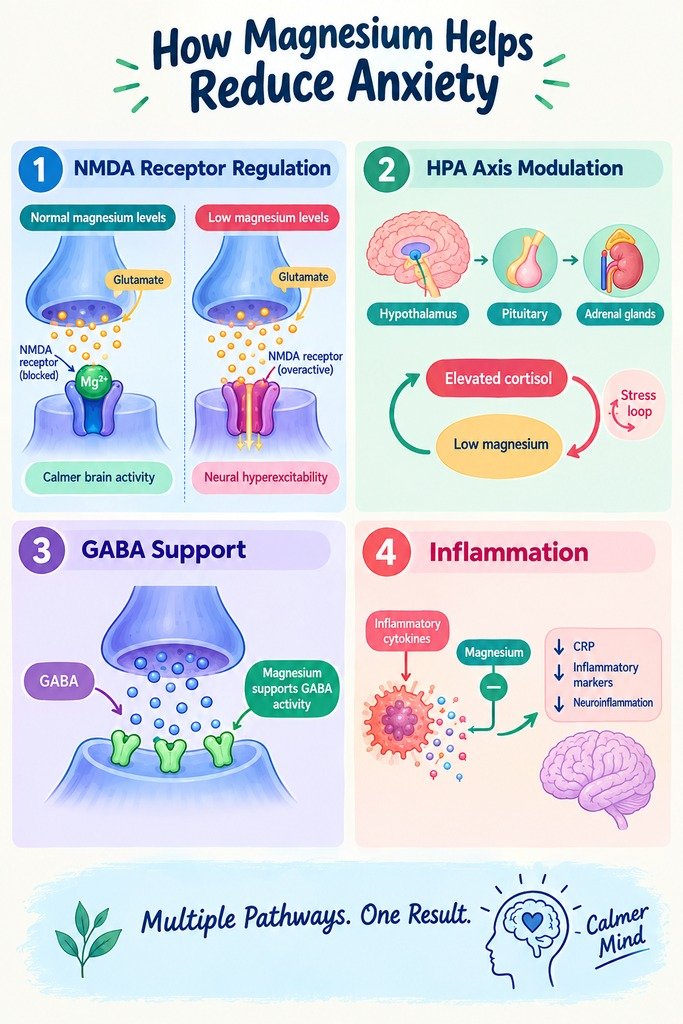
NMDA receptor regulation. Magnesium acts as a natural blocker of NMDA receptors — glutamate receptors involved in excitatory neurotransmission. When magnesium levels are low, NMDA receptors become overactive, promoting a state of neural hyperexcitability that is associated with anxiety, irritability, and heightened stress reactivity.2 This is one of the most plausible direct mechanisms linking magnesium to anxiety.
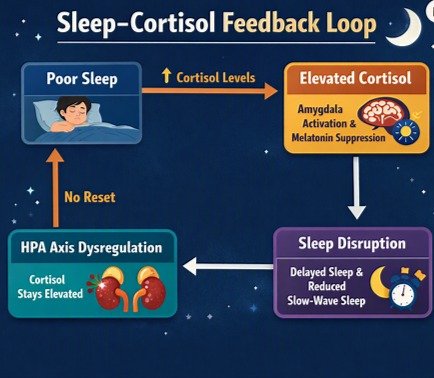
HPA axis modulation. Magnesium plays a regulatory role in the HPA axis — the stress-hormone cascade we discussed in Part 1. It helps regulate the release of cortisol: low magnesium is associated with elevated cortisol, and elevated cortisol depletes magnesium further — creating a stress-driven loop that reduces the body’s capacity to regulate its own stress response.3
GABA support. Magnesium supports the activity of GABA — the brain’s primary inhibitory neurotransmitter and the same neurotransmitter targeted by benzodiazepines. By enhancing GABAergic signalling, adequate magnesium contributes to a calmer, less reactive nervous system.2
Inflammation. As covered in Part 4, neuroinflammation plays a role in anxiety and depression. Magnesium has documented anti-inflammatory properties — it reduces CRP and other inflammatory markers — providing an additional potential mechanism for its effects on mood.1
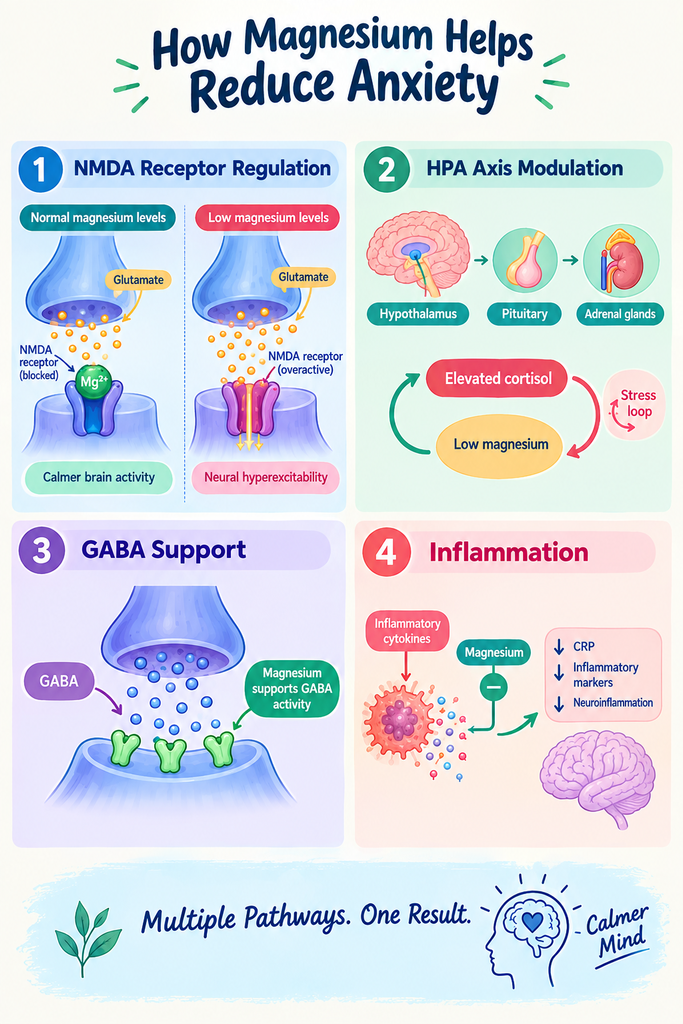
The biological case is credible. The question is whether supplementation in humans produces clinically meaningful effects.
The Deficiency Question — Are We Really Low in Magnesium?
One of the foundational claims underpinning the magnesium-for-anxiety narrative is that modern populations are widely deficient. This deserves some scrutiny.
True magnesium deficiency (hypomagnesaemia) is relatively uncommon in healthy adults and is typically associated with specific medical conditions including type 2 diabetes, gastrointestinal disorders, alcoholism and prolonged use of certain medications such as proton pump inhibitors and loop diuretics.
What is more common and more relevant to the anxiety conversation is suboptimal magnesium status: not a clinical deficiency, but an intake below the recommended dietary allowance (RDA) that may not be sufficient for optimal physiological function. Studies using dietary surveys suggest that a significant proportion of adults in Western countries — particularly the United States and United Kingdom consume less than the recommended 310–420 mg per day.4
This suboptimal intake is plausibly linked to the processed food-heavy modern diet, which is low in the main dietary sources of magnesium: dark leafy vegetables, legumes, nuts, seeds, and wholegrains:
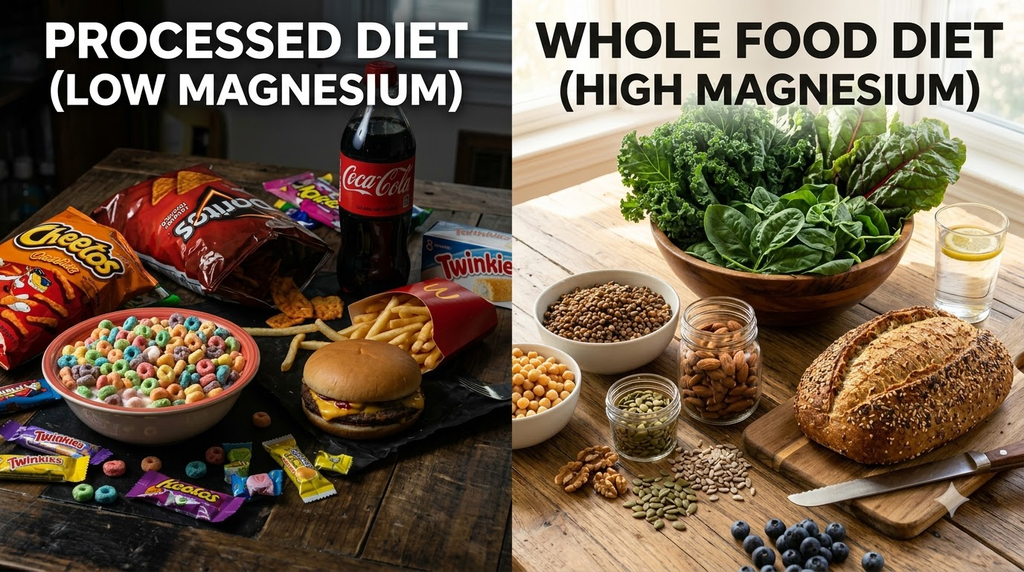
Whether suboptimal intake produces meaningful anxiety symptoms and whether supplementation corrects them is the crux of the clinical question.
What the Clinical Research Actually Shows
The clinical evidence for magnesium supplementation in anxiety is real but more limited than wellness culture suggests. Here is an honest appraisal.
Studies that support the anxiety link:
A 2017 systematic review published in Nutrients examined 18 studies on magnesium and anxiety-related outcomes. The authors concluded that existing evidence suggested a beneficial effect of magnesium on subjective anxiety but importantly, they noted that the quality of the evidence was generally low, with most studies being small, short-term, and lacking rigorous blinding.5
A randomized controlled trial published in PLoS ONE in 2017 found that magnesium chloride supplementation (248 mg daily for 6 weeks) produced significant reductions in self-reported anxiety and depression scores compared with placebo with apparent effects within two weeks. The study was reasonably well-designed, but the participant group was self-selected and the measures were subjective6
Animal studies have consistently shown that magnesium depletion induces anxiety-like behaviors and that supplementation reverses them providing strong mechanistic support, though animal-to-human translation is always uncertain.
Studies with weaker or null results:
Several well-controlled trials have found no significant effect of magnesium supplementation on anxiety in populations with normal magnesium status. This is a critical nuance: the evidence most consistently supports a benefit in people with suboptimal magnesium levels, not in those who are already replete.4
A Cochrane-style review of magnesium for anxiety, published in 2016, concluded that while the existing evidence was suggestive, it was insufficient to make definitive clinical recommendations and called for larger, higher-quality RCTs.5
The honest summary: there is a plausible biological mechanism, modest clinical evidence, and a clear research gap. Magnesium is not a proven anxiolytic in the way that CBT or SSRIs are, but it is not without scientific basis either.
The Hidden Problem With Magnesium Supplements
Magnesium supplements come in many forms, and they differ significantly in bioavailability (how well they are absorbed) and in which tissues they preferentially reach.
This is where most magnesium conversations in wellness culture go badly wrong and where your supplement choice can make the difference between benefit and none. The Table below shows the comparison between different types of Magnesium supplements:
| Magnesium form | What it is | Potential benefits | Things to know |
|---|---|---|---|
| Magnesium glycinate | Magnesium bound to glycine, an amino acid | Often used for relaxation, anxiety and sleep; generally, well absorbed and gentle on the stomach | A popular choice when the goal is calmness or better sleep |
| Magnesium L-threonate | A form developed to potentially increase magnesium availability in the brain | Early research suggests possible benefits for cognition and anxiety | Human evidence is still limited, so more research is needed |
| Magnesium acetyl taurate | Magnesium bound to taurine, a compound involved in nervous-system and cardiovascular function | May support nervous-system and cardiovascular health | Less studied specifically for anxiety than magnesium glycinate |
| Magnesium citrate | Magnesium combined with citric acid | Good general-purpose option; reasonably well absorbed | Affordable and widely available, but higher doses may cause loose stools |
| Magnesium oxide | A simple magnesium salt commonly used in inexpensive supplements | Mainly useful as a laxative and for providing magnesium | Poorly absorbed compared with many other forms and more likely to cause digestive effects |
Magnesium glycinate: magnesium bound to the amino acid glycine. One of the highest bioavailability forms, well tolerated gastrointestinally, and glycine itself has calming properties through GABA receptor activity. This is the most widely recommended form for anxiety and sleep.7
Magnesium L-threonate: a form developed specifically to cross the blood-brain barrier. Preclinical research (primarily in animal models) suggests it raises brain magnesium levels more effectively than other forms and may have benefits particularly for cognitive function and anxiety. Clinical evidence in humans is still limited but promising.7
Magnesium Acetyl taurate: magnesium bound to taurine, which also has calming neurological effects. Some evidence for cardiovascular benefit and nervous system support, though less studied for anxiety specifically than glycinate.8
Magnesium citrate — reasonable bioavailability, widely available, and less expensive than the above. A solid general-purpose option, though more likely to cause loose stools at higher doses.
Magnesium oxide — the most common form in cheap, widely available supplements. Poor bioavailability (only around 4% absorbed), primarily used as a laxative. Almost certainly not the form you want if your goal is systemic magnesium repletion or anxiety support. 7
If you are taking magnesium for anxiety and using magnesium oxide — it has lower bioavailability and is commonly used for its laxative effect, so other forms may be preferable when the primary goal is magnesium repletion or anxiety support.
Who Might Actually Benefit
Based on the available evidence, the people most likely to see meaningful benefit from magnesium supplementation for anxiety are:
- Those with suboptimal dietary magnesium intake — common in people consuming a highly processed diet low in vegetables, legumes, and wholegrains
- Those under chronic stress — cortisol-driven magnesium depletion is real, and the stress-deficiency loop is plausible
- Those with type 2 diabetes, gastrointestinal conditions, or on medications known to deplete magnesium
- Those with anxiety accompanied by muscle tension, poor sleep, or heightened physical stress reactivity — symptoms that align most closely with the mechanisms described above
Those least likely to see dramatic benefit: people with already adequate dietary magnesium intake and no other risk factors for depletion. For this group, the supplement may simply be excreted.
What You Can Do Instead — Or Alongside
Before reaching for a supplement, it is worth considering whether dietary sources can address the gap. The following foods are among the richest dietary sources of magnesium, and are also broadly anti-inflammatory and supportive of gut health — two themes that run throughout this series:
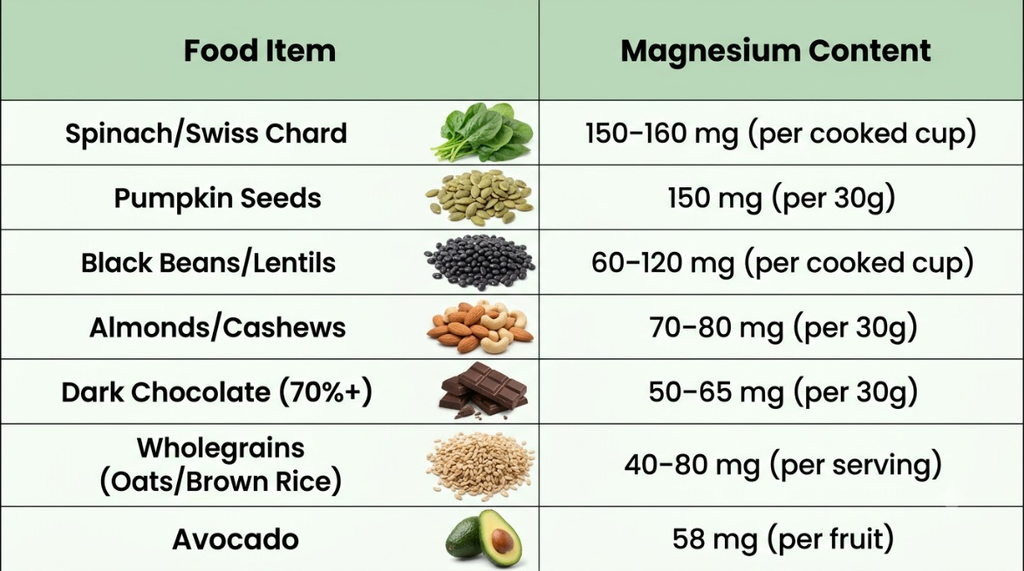
If supplementation is appropriate, discuss it with a healthcare professional — particularly if you are on medications for blood pressure, diabetes, or gastrointestinal conditions, as interactions are possible. The typical supplemental dose used in anxiety research ranges from 200–400 mg of elemental magnesium daily, usually as glycinate or citrate.
The Bottom Line
Let’s get one thing straight: magnesium is not a cure for anxiety. Yet the conversation shouldn’t end there. While some evidence-based critics are quick to dismiss its benefits, the science paints a far more interesting picture, one that sits somewhere between hype and skepticism. Magnesium has a plausible role in anxiety because it supports several pathways involved in stress regulation and relaxation. While the evidence isn’t strong enough to call it a treatment, some people, especially those with low magnesium levels, may benefit. Further, not all forms are equal: magnesium glycinate and L-threonate are generally better choices than magnesium oxide.
That said, magnesium is best viewed as a support tool, not a solution. The foundations of anxiety management remain the same: quality sleep, regular exercise, stress management, breathwork, and good gut health.
Think of magnesium as a supporting actor, not the main character. Worth considering, but not a substitute for the habits that drive lasting change.
Next in the series: Exercise as antidepressant — what the research actually says about how movement rewires the brain for better mental health.
If you found this useful, subscribe to weekly evidence-based posts on mental health and mind-body science at The Health Explainer. If you are experiencing significant anxiety, please speak with a qualified healthcare professional before making changes to your supplement regimen.
Do Magnesium Actually Reduces Anxiety
References
- de Baaij JH, Hoenderop JG, Bindels RJ. Magnesium in man: implications for health and disease. Physiological Reviews. 2015;95(1):1–46.
- Boyle NB, Lawton C, Dye L. The effects of magnesium supplementation on subjective anxiety and stress — a systematic review. Nutrients. 2017;9(5):429.
- Pickering G, Mazur A, Trousselard M, et al. Magnesium status and stress: the vicious circle concept revisited. Nutrients. 2020;12(12):3672.
- Rosanoff A, Weaver CM, Rude RK. Suboptimal magnesium status in the United States: are the health consequences underestimated? Nutrition Reviews. 2012;70(3):153–64.
- Boyle NB, Lawton CL, Dye L. The effects of magnesium supplementation on subjective anxiety: a systematic review. Magnesium Research. 2016;29(3):120–5.
- Tarleton EK, Littenberg B, MacLean CD, Kennedy AG, Daley C. Role of magnesium supplementation in the treatment of depression: a randomized clinical trial. PLoS ONE. 2017;12(6):e0180067.
- Uysal N, Kizildag S, Yuce Z, et al. Timeline (bioavailability) of magnesium compounds in hours: which magnesium compound works best? Biological Trace Element Research. 2019;187(1):128–36.
- Kumar A, Mehan S, Gupta S, Gupta GD, Samant R, Tongra M. Enhanced Neurophysiological Benefits of Magnesium-Acetyl-Taurate Over Magnesium-L-Threonate: A Comparative pre-clinical Study on Bioavailability, Synaptic Plasticity and Cognitive Functions. Neuromolecular Med. 2026 May 5;28(1):25.
magnesium for anxiety, magnesium for anxiety, magnesium for anxiety, magnesium for anxiety, magnesium for anxiety, magnesium for anxiety, magnesium for anxiety, magnesium for anxiety, magnesium for anxiety, magnesium for anxiety, magnesium for anxiety, magnesium for anxiety, magnesium for anxiety, magnesium for anxiety, magnesium for anxiety, magnesium for anxiety, magnesium for anxiety, magnesium for anxiety