By Shilpa Khirbat | Medical Writer & Health Blogger
Part of the Mind-Body Series at The Health Explainer. Catch up here: [Part 1 — Why Mental Stress Makes You Physically Sick] | [Part 2 — Your Gut Has Its Own Brain] | [Part 3 — What Happens to Your Brain During a Panic Attack] | [Part 4 — How Chronic Inflammation Connects Body and Mind] | [Part 5 — Is Burnout a Real Medical Diagnosis?]
Breathing is a unique process with dual nature as it happens automatically to keep you alive, yet it’s also something you can consciously control whenever you choose.
You do not consciously control your heartbeat, your digestion, or your immune response. However, your breath sits at the intersection of the voluntary and involuntary nervous systems, which means it offers something rare: a direct, immediate lever on your own physiological state.
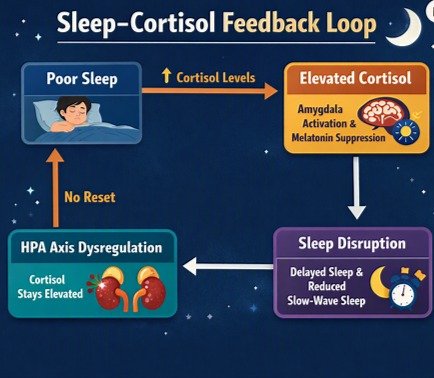
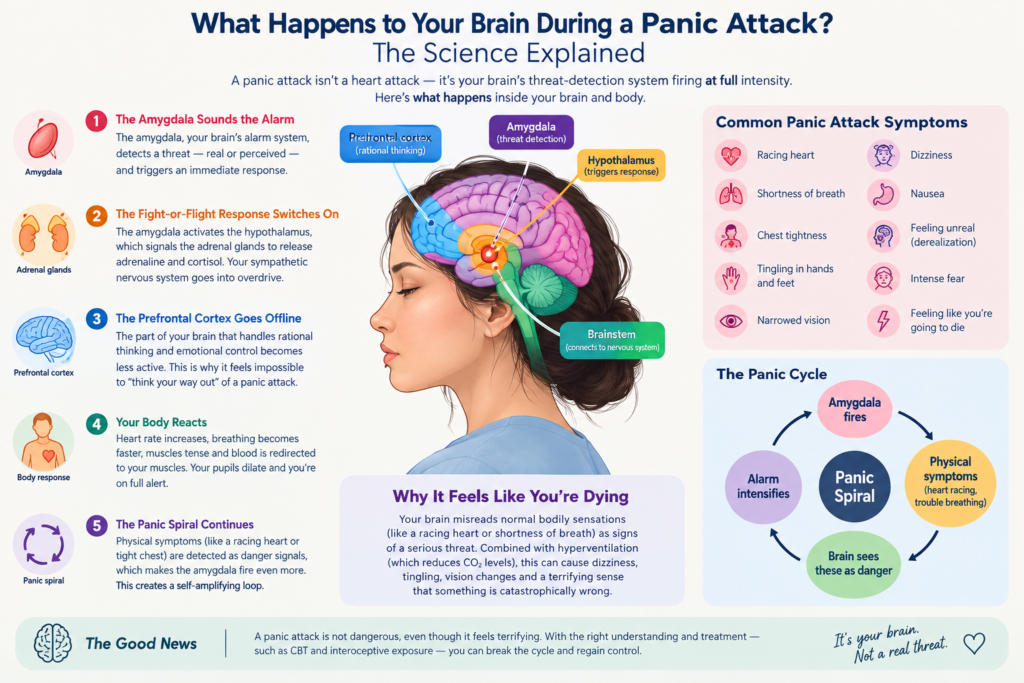
You have already encountered this idea across this series. In Part 1, controlled breathing was described as the fastest evidence-based tool for activating the parasympathetic nervous system. In Part 3, slow exhalation was identified as a direct neurological intervention during a panic attack. In Part 5, psychological detachment, supported by deliberate breathing was cited as part of burnout recovery.
It’s time to go deeper into the science of breathwork — uncovering which practices are backed by evidence, how they influence your brain and body, and where enthusiasm outpaces reality.
Why Breathing Controls Your Nervous System
To understand why breathwork is effective, you need to know about one key part of your body: the vagus nerve.
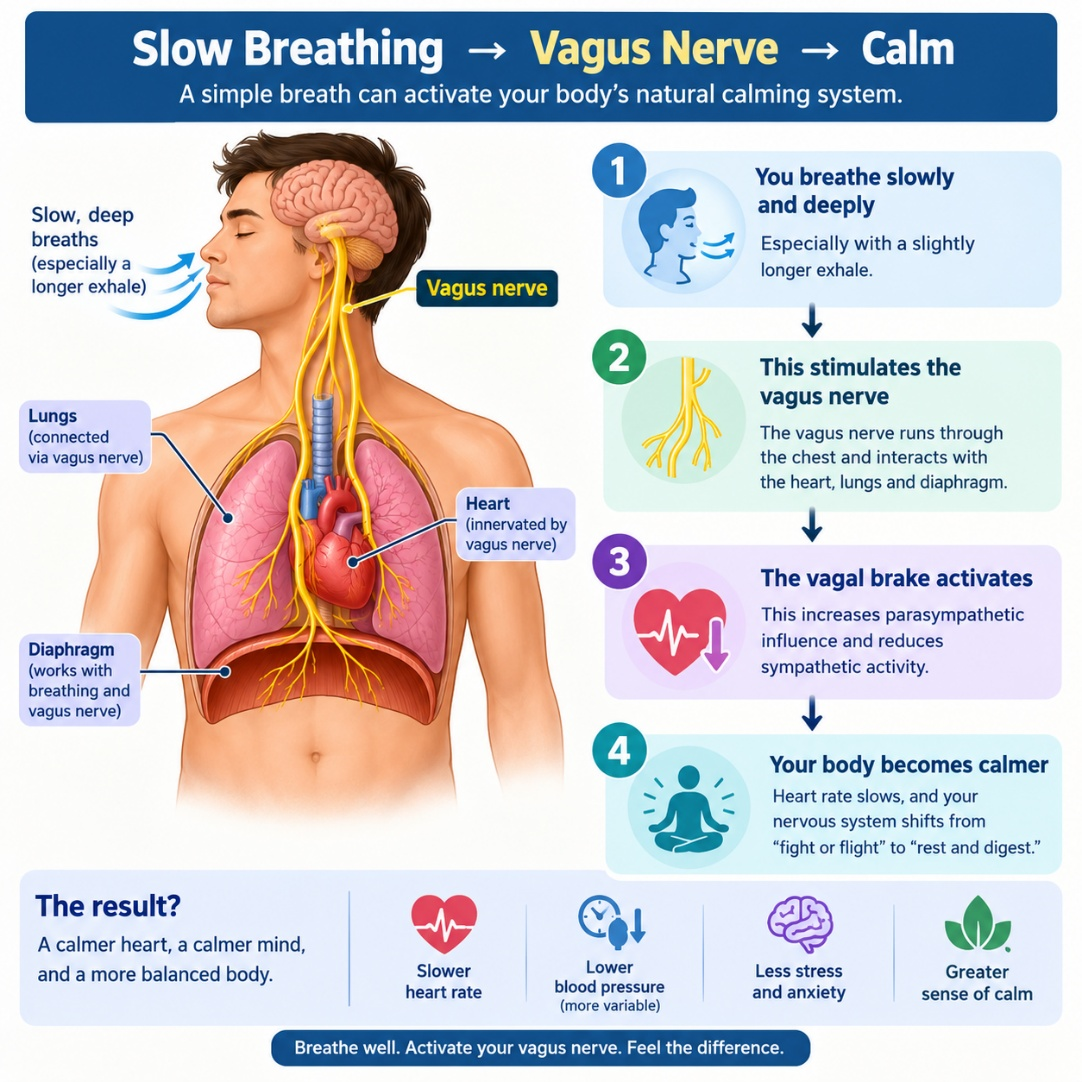
As we discussed in Part 2, the vagus nerve is the longest cranial nerve in the body running from the brainstem through the neck, chest, and abdomen, connecting your brain to your heart, lungs, and gut. It is the primary conduit of the parasympathetic nervous system: the “rest and digest” side that counterbalances the “fight or flight” sympathetic response.
Here is the key insight: the vagus nerve travels through the chest and interacts with structures involved in breathing, including the lungs and heart. When you breathe slowly and deeply particularly when you extend the exhale — you physically stimulate the vagus nerve. This stimulation triggers what is called the vagal brake: a rapid reduction in heart rate, a drop in blood pressure, and a shift in the entire nervous system away from sympathetic activation and toward parasympathetic calm.1
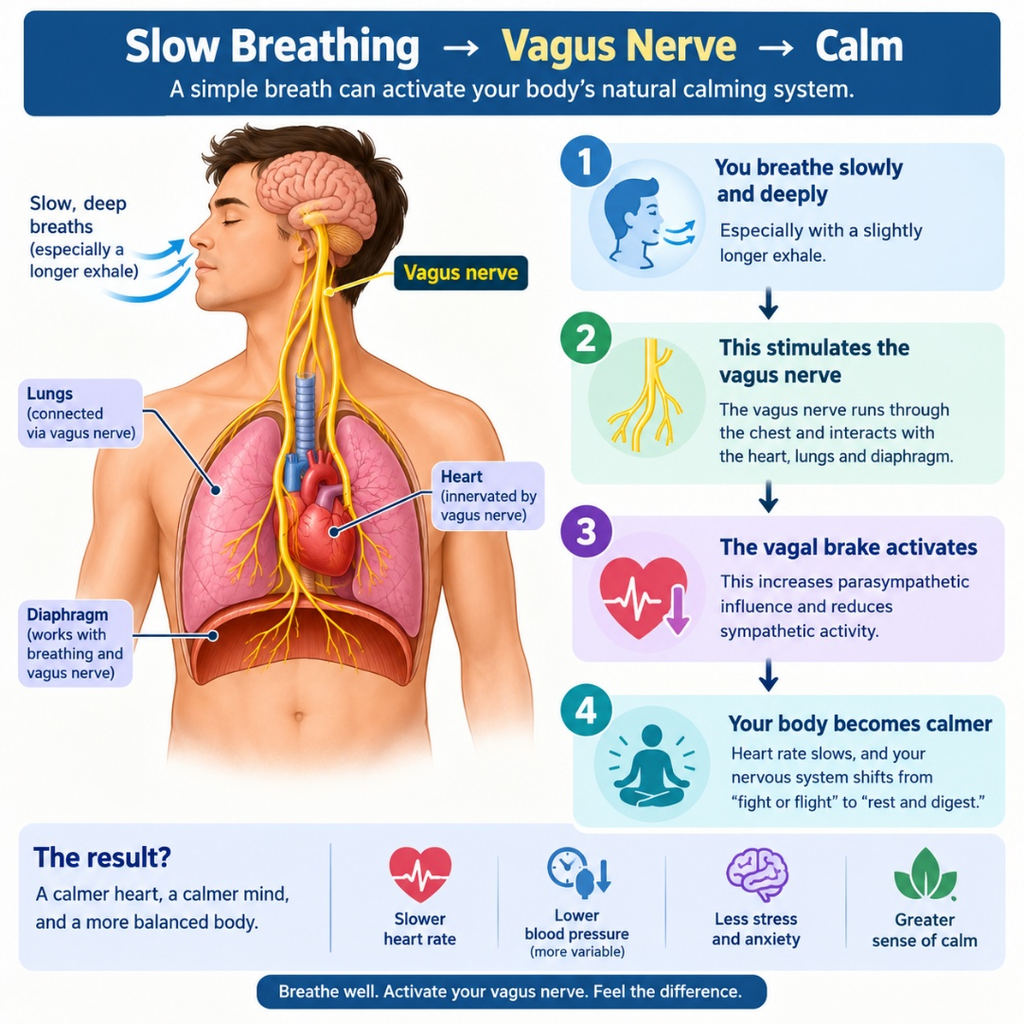
This is not a metaphor. It is measurable. The effect of slow breathing on heart rate variability (HRV) — the gold-standard measure of autonomic nervous system balance — has been demonstrated in dozens of controlled studies. Higher HRV is consistently associated with better stress resilience, better emotional regulation, and better cardiovascular health.2
The breath is not just a metaphor for calm. It is a physiological mechanism for producing it.
Heart Rate Variability (HRV): The Metric That Matters
To compare breathwork methods, it’s important to first understand heart rate variability (HRV). This measure is central to most studies and explains why certain techniques stand out.
HRV refers to the variation in time between successive heartbeats. Counterintuitively, a healthy heart does not beat with perfect regularity it speeds up slightly on the inhale and slows down on the exhale. This rhythmic variation is driven by the vagus nerve and is a marker of how responsive and flexible the autonomic nervous system is.
When you are chronically stressed, anxious, or burnt out, HRV decreases. the nervous system becomes rigid and less adaptive. When you practise slow, rhythmic breathing, HRV increases and the system becomes more flexible and resilient.
Research has identified an optimal breathing rate for maximising HRV: approximately 5–6 breaths per minute i.e.., around one breath every 10–12 seconds. This rate, sometimes called the resonance frequency, produces the greatest entrainment between the breath cycle and the heart rate cycle, maximising vagal stimulation.3
Most people breathe at 12–20 breaths per minute at rest. Slowing to 5–6 is a significant shift and the physiological effects are correspondingly significant.
The Techniques: What the Evidence Actually Shows
1. Slow Diaphragmatic Breathing (5–6 breaths/minute)
What it is: Breathing from the diaphragm belly rises on inhale, falls on exhale — at approximately 5–6 breaths per minute. Equal inhale and exhale, typically 5 seconds each.
What the evidence shows: This is the most rigorously studied breathing technique in clinical literature. A systematic review of 15 randomised controlled trials found that slow breathing at resonance frequency significantly reduced anxiety, improved HRV, and lowered cortisol compared with control conditions.4 It is now used clinically in cardiac rehabilitation, hypertension management, and anxiety treatment.
What it does in the body: Maximises vagal tone, reduces sympathetic activation, lowers blood pressure, improves oxygen efficiency, and through sustained practice produces lasting improvements in baseline HRV.
Best for: Chronic stress management, daily practice, hypertension, general anxiety.
2. Extended Exhale Breathing (4-6 or 4-8 pattern)
What it is: Inhale for 4 counts, exhale for 6–8 counts. The exhale is deliberately longer than the inhale.
What the evidence shows: The extended exhale is the most important single element of any breathing technique for acute stress reduction. Exhalation activates the parasympathetic nervous system more strongly than inhalation which activates the sympathetic side. By making the exhale longer, you tip the balance toward parasympathetic dominance.1
What it does in the body: Directly stimulates the vagal brake, rapidly reduces heart rate, and interrupts the hyperventilation cycle that perpetuates panic. As described in Part 3, this is why extended exhale breathing is the most effective immediate intervention during a panic attack.
Best for: Acute stress, pre-performance anxiety, panic attack interruption, falling asleep.
3. Box Breathing (4-4-4-4)
What it is: Inhale for 4 counts, hold for 4, exhale for 4, hold for 4. Repeat.
What the evidence shows: Box breathing was originally developed by the US Navy SEALs for use in high-stress operational environments. Clinical studies have demonstrated significant reductions in anxiety and improvements in cognitive performance under pressure.5 The breath-holds appear to enhance carbon dioxide tolerance, which reduces the hypersensitivity to CO₂ changes that drives hyperventilation in anxiety-prone individuals.
What it does in the body: Slows breathing rate to approximately 3–4 breaths per minute, increases CO₂ tolerance, activates the parasympathetic nervous system, and improves attention and cognitive clarity by reducing sympathetic nervous system noise.
Best for: High-pressure situations, pre-meeting or pre-performance calming, improving focus, building CO₂ tolerance in anxiety-prone individuals.
4. The Physiological Sigh (Double Inhale + Extended Exhale)
What it is: A double inhale through the nose (a full breath, then a second sniff on top to maximally inflate the lungs), followed by a long, slow exhale through the mouth. One to three repetitions.
What the evidence shows: This technique has received significant research attention following work by neuroscientist Andrew Huberman and colleagues at Stanford. A 2023 randomised controlled trial published in Cell Reports Medicine compared the physiological sigh with other breathing techniques and mindfulness meditation. The physiological sigh produced the fastest and most significant reduction in self-reported anxiety and the greatest improvement in HRV in real time — in as little as one to three breath cycles.6
What it does in the body: The double inhale pops collapsed alveoli (the tiny air sacs in the lungs), maximising lung surface area. The extended exhale then expels a large volume of CO₂ rapidly directly counteracting the CO₂ depletion that drives panic symptoms. This makes it the fastest-acting breathing intervention currently documented in the literature.
Best for: Immediate acute stress reduction, rapid calm before a difficult conversation or situation, panic interruption. It is not designed for sustained practice, but it is most effective as a rapid intervention.
5. The 4-7-8 Technique
What it is: Inhale for 4 counts, hold for 7 counts, exhale for 8 counts. Popularised by Dr Andrew Weil.
What the evidence shows: The 4-7-8 technique is widely promoted in wellness culture but has a thinner evidence base than the techniques above. The available research suggests it reduces anxiety and improves sleep onset likely due to the extended exhale (8 counts) activating the vagal brake, and the breath-hold increasing CO₂ and promoting a mild relaxation response.4
What it does in the body: Extended breath-hold increases CO₂ concentration, which dilates blood vessels and promotes relaxation. The long exhale activates the parasympathetic nervous system. The overall technique significantly slows breathing rate which alone produces most of the benefit.
Best for: Sleep onset, general relaxation. The 7-count hold can feel uncomfortable for beginners if so, a 4-6 pattern (inhale 4, exhale 6) produces similar effects with less discomfort.
What Breathwork Does Not Do — Keeping It Honest
In the spirit of the evidence-based approach that defines this series, it is worth being clear about what breathwork is not.
Breathwork is not a substitute for treatment of clinical anxiety disorders, panic disorder, depression, or trauma. It is a powerful tool for nervous system regulation but for clinical conditions, it is best understood as a complement to, not a replacement for, evidence-based treatments such as CBT, medication, or trauma-focused therapy.
There is also a category of breathwork including holotropic breathwork and some rebirthing techniques that makes claims about emotional healing, trauma release, and altered states of consciousness that go well beyond what the current peer-reviewed literature supports. These techniques are not without risk, particularly for people with cardiovascular conditions or a history of psychosis. Approach with caution and always consult a healthcare professional before undertaking intensive breathwork programmes.
Building a Practice: What the Research Recommends
Consistency matters more than duration. The research on HRV improvement and stress resilience consistently shows that brief, daily practice outperforms occasional long sessions.
For daily stress management: 5 minutes of slow diaphragmatic breathing at 5–6 breaths per minute, once or twice per day. Morning and evening are most effective — morning to set the tone for the day, evening to shift the nervous system out of sympathetic mode before sleep.
For acute stress: One to three physiological sighs for immediate relief, followed by extended exhale breathing (4-6 or 4-8) for sustained calming.
For high-pressure situations: Box breathing (4-4-4-4) for 2–3 minutes beforehand is used by surgeons, pilots, and military personnel precisely because it improves cognitive performance under pressure.
For sleep: The 4-7-8 technique or extended exhale breathing lying down. Research on pre-sleep breathing shows improved sleep onset latency and sleep quality with as little as 5 minutes of slow breathing before bed.4
The Bottom Line
Your breath is not just keeping you alive. It is the most accessible, fastest-acting, and most scientifically validated tool you have for regulating your own nervous system; available at any moment, requiring no equipment, and producing measurable physiological effects within seconds.
The techniques described in this post are not wellness trends or ancient wisdom repackaged for modern audiences. They are evidence-based interventions with documented effects on HRV, cortisol, anxiety, blood pressure and cognitive performance.
You have been breathing your entire life. Learning to breathe deliberately — slowly, deeply, with an extended exhale is one of the highest-leverage investments you can make in your own mental and physical health.
Start with five minutes today. Your vagus nerve is ready when you are.
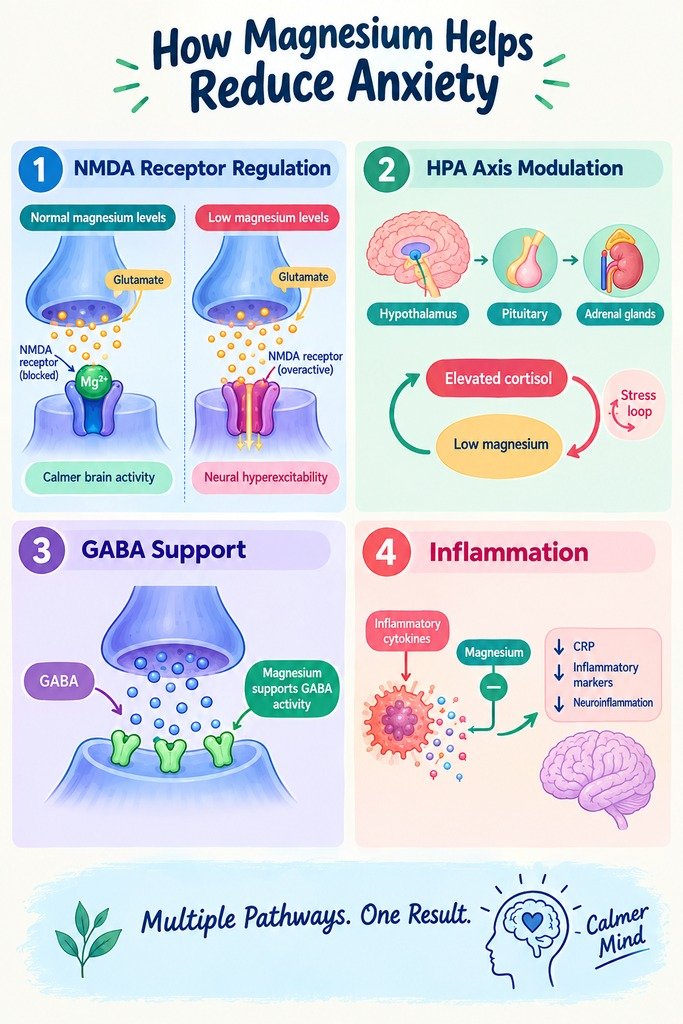
Next in the series: Do magnesium supplements actually reduce anxiety? — Separating the evidence from the marketing in one of the most searched supplement questions on the internet.
If you found this useful, subscribe to weekly evidence-based posts on mental health and mind-body science at The Health Explainer. If you are experiencing clinical anxiety, panic disorder, or any other mental health condition, please speak with a qualified healthcare professional before relying on breathwork as a primary treatment.
Watch: Cold Plunges and Mental Health video
References
- Russo MA, Santarelli DM, O’Rourke D. The physiological effects of slow breathing in the healthy human. Breathe. 2017;13(4):298–309.
- Birdee G, Nelson K, Wallston K, Nian H, Diedrich A, Paranjape S, Abraham R, Gamboa A. Slow breathing for reducing stress: The effect of extending exhale. Complement Ther Med. 2023 May;73:102937.
- Lehrer PM, Gevirtz R. Heart rate variability biofeedback: how and why does it work? Frontiers in Psychology. 2014;5:756.
- Zaccaro A, Piarulli A, Laurino M, et al. How breath-control can change your life: a systematic review on psycho-physiological correlates of slow breathing. Frontiers in Human Neuroscience. 2018;12:353.
- Steffen PR, Austin T, DeBarros A, Brown T. The impact of resonance frequency breathing on measures of heart rate variability, blood pressure, and mood. Frontiers in Public Health. 2017;5:222.
- Balban MY, Neri E, Kogon MM, et al. Brief structured respiration practices enhance mood and reduce physiological arousal. Cell Reports Medicine. 2023;4(1):100895.
- Gerritsen RJS, Band GPH. Breath of life: the respiratory vagal stimulation model of contemplative activity. Frontiers in Human Neuroscience. 2018;12:397.
- Schappe MS, Brinn PA, Joshi NR, Greenberg RS, Min S, Alabi AA, Zhang C, Liberles SD. A vagal reflex evoked by airway closure. Nature. 2024 Mar;627(8005):830-838.